Summary Pakistan and China are entering a new phase of economic partnership with a focus on mineral development through CPEC 2.0, aiming to boost productivity, exports, and sustainable growth.
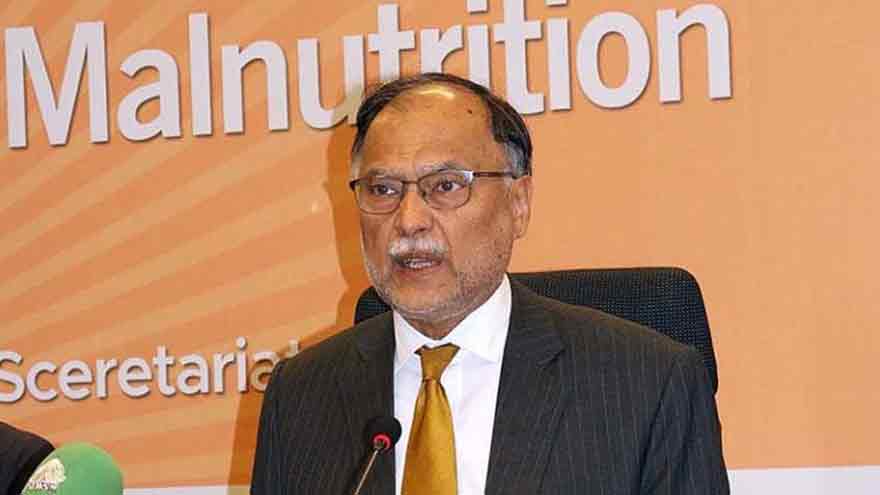
ISLAMABAD (APP):Federal Minister for Planning, Development and Special Initiatives Professor Ahsan Iqbal on Wednesday said Pakistan and China were entering a decisive new phase of economic partnership by placing mineral development at the centre of CPEC 2.0, aimed at transforming connectivity into productivity, exports and sustainable growth.
Addressing the launching ceremony of the China-Pakistan Mineral Cooperation Forum here, he said the two countries were repositioning their strategic partnership towards minerals-led industrialization, with Gwadar emerging as the principal gateway to connect Pakistan’s mineral-rich regions with regional and global markets.
The minister said the initiative reflected a deliberate shift from infrastructure-centric cooperation to value-added, export-oriented collaboration, as both countries approach the 75th anniversary of their diplomatic relations.
“As we approach 75 years of Pakistan-China relations, our partnership stands as a model of continuity, trust and strategic depth. This is a relationship that has never witnessed a season of autumn; it has always flourished in spring and reached newer heights every year,” he remarked.
Ahsan Iqbal said the China-Pakistan Economic Corridor (CPEC) phase-I remained the most visible expression of this enduring partnership, noting that projects completed under the corridor had added over 8,000 megawatts of energy capacity, upgraded more than 1,000 kilometres of road infrastructure, modernised Gwadar and strengthened national connectivity.
Referring to his recent visit to Gwadar, the minister said the China-built international airport had positioned the port city to play a pivotal role in Pakistan’s next phase of growth.
“Gwadar is now ready not only to function as a smart port city but also to serve as a hub for the mining industry by linking Pakistan’s mineral resources with global markets,” he added.
He said CPEC Phase-II was focused on addressing Pakistan’s long-standing structural weaknesses, particularly its weak export base. “Infrastructure for its own sake is not enough. Our objective is to translate connectivity into productivity, productivity into exports, and exports into jobs and sustainable growth,” he said.
Highlighting Pakistan’s untapped mineral wealth, Ahsan Iqbal said the country hosts around 92 known minerals, with 52 currently under extraction, nearly 5,000 operational mines and annual production of about 68.5 million metric tons. Despite this scale, he observed, mineral exports remained modest, contributing only 2–3 percent to GDP.
“This gap between potential and performance is largely due to lack of value addition,” he said, adding that over 90 percent of mineral exports were raw or semi-processed, while only about 40 percent of Pakistan’s land had been geologically mapped.
Citing marble and granite reserves stretching from Turbat to Chitral, the minister said outdated blasting and extraction methods were destroying value. “There is a huge opportunity for Chinese enterprises to invest in modern cutting and processing technologies so Pakistan can become a global hub for world-class marble and earn billions of dollars from this sector alone,” he added.
He said with improved governance, technology and strategic partnerships, Pakistan’s mineral exports could rise to $6–8 billion annually within this decade, support GDP growth of around 6 percent and generate more than 350,000 direct and indirect jobs.
Ahsan Iqbal said China’s role was central to this transformation due to its expertise across the mining value chain, including geological surveying, modern extraction, processing, smelting, refining, environmental management and project financing. Existing projects such as Saindak Copper-Gold, Duddar Lead-Zinc and Thar Coal, he added, illustrated the potential of bilateral cooperation.
The minister said Pakistan was now moving decisively beyond extraction by developing mineral processing plants, smelters, refining facilities and mineral-based industries linked with special economic zones and transport corridors.
He identified the Naukundi–Mashkhel–Turbat–Gwadar corridor as a potential flagship project to directly connect Balochistan’s mineral belt with Gwadar Port.
Stressing inclusive and responsible development, he said mining must strengthen national cohesion and deliver tangible benefits to resource-rich regions, particularly Gilgit-Baltistan, Balochistan and parts of Khyber Pakhtunkhwa, through jobs, skills, infrastructure, education and health services.
He added that strong environmental standards and adherence to ESG principles were essential for long-term sustainability and investor confidence.
Ahsan Iqbal said the government had strengthened institutional coordination through the Special Investment Facilitation Council to ensure fast-track approvals, policy consistency and robust security arrangements, reaffirming that the safety and security of Chinese nationals and investments remained a top national priority.
Inviting Chinese enterprises to take a leading role in developing copper, gold, rare earths and other critical minerals vital for clean energy and advanced manufacturing, the minister said, “With China as our trusted partner, Pakistan is determined to convert its mineral wealth into industrial strength, export competitiveness and shared prosperity.”