Summary “He directed all stakeholders to ensure transparency and efficiency in distribution so that fertilizers reach farmers in a timely manner,” the press release said.
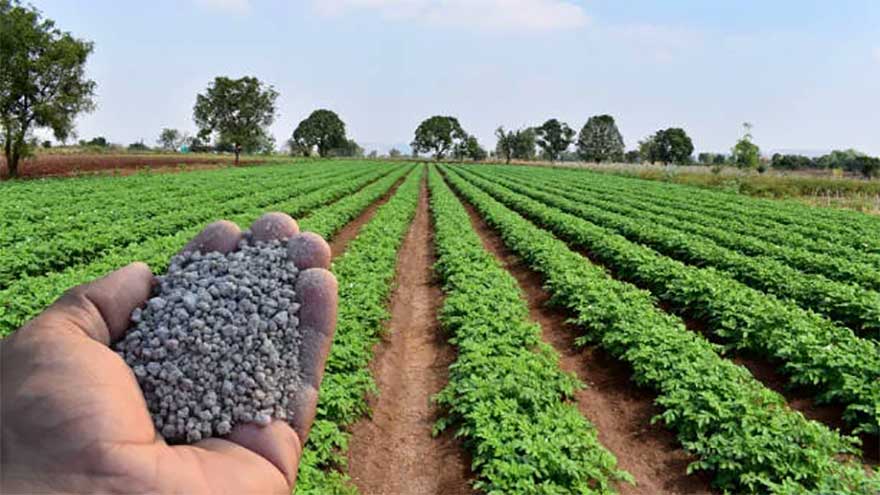
ISLAMABAD (Web Desk) - Minister for Food Security on Wednesday vowed to ensure uninterrupted supply of fertilizers across the country, directing authorities to ensure distribution in a transparent manner as the war in the Middle East continues to disrupt the global supply of fuel and fertilizers.
Much of the world’s fertilizer is produced in the Middle East, with one-third of global trade in it passing through the Strait of Hormuz. Iran has disrupted trade in the narrow shipping route along Iran’s coast that has largely been shut since the conflict began on Feb. 28. The move has not only sparked energy prices but also of fertilizers in many parts of the world.
Food Security Minister Rana Tanveer Hussain chaired a meeting of the Fertilizer Review Committee on Wednesday to assess the demand and supply situation of urea and Diammonium Phosphate (DAP) fertilizers, the Press Information Department (PID) said in a press release, as the Middle East war refuses to let up.
“The minister reaffirmed the government’s strong commitment to ensuring uninterrupted availability of fertilizers, emphasizing that agriculture— contributing nearly 19–20 percent to the GDP and employing around 37–38 percent of the labor force— remains central to Pakistan’s economic stability,” the PID said.
The meeting was attended by representatives from Pakistani provinces, fertilizer industry leaders including the Fauji Fertilizer Company, Engro Corporation, Fatima Fertilizer Company, FMPak Limited, and officials from the National Fertilizer Development Center and other stakeholders.
Participants of the meeting were informed that Pakistan cultivates approximately 22–23 million hectares annually across the Rabi and Kharif seasons, with wheat dominating the Rabi season and rice, cotton and sugarcane as key Kharif crops.
“Fertilizer usage continues to align with these cropping cycles, supporting increased productivity,” the PID said. “Annual urea demand ranges between 6.5–7 million tons, while DAP demand stands between 1.2–1.5 million tons, with domestic production meeting the majority of requirements.”
Hussain, while reviewing the outlook for Kharif season 2026, expressed satisfaction that a “comfortable supply position” is expected for both urea and DAP, with sufficient stocks available to meet seasonal demand.
“The government is also actively monitoring global fertilizer markets and facilitating import arrangements to ensure the timely availability of DAP,” the PID said. “Emphasis was placed on improving logistics and supply chain efficiency to support uninterrupted distribution across all regions.”
The minister directed authorities to ensure that fertilizers are available to farmers at affordable prices, noting that domestic urea prices in Pakistan remain significantly lower than international markets.
“He directed all stakeholders to ensure transparency and efficiency in distribution so that fertilizers reach farmers in a timely manner,” the press release said.