Summary Gold rises 1% on weak dollar and bargain buying but nears 4th weekly drop as high oil prices fuel inflation and rate hike expectations amid U.S.-Iran tensions.
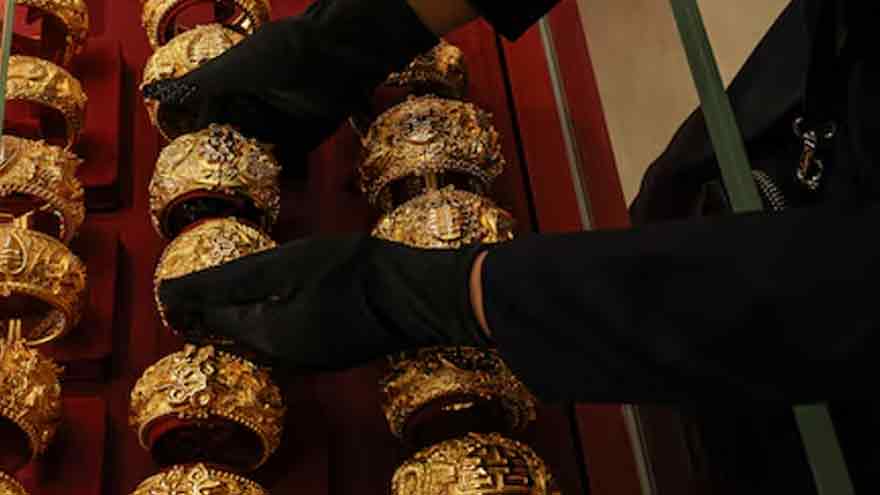
(Reuters) - Gold rose over 1% on Friday, buoyed by a weaker dollar and bargain hunting, but was on track for a fourth straight weekly decline as surging energy prices fuelled inflation concerns and raised expectations of higher global interest rates.
Spot gold rose 1.1% to $4,428.30 per ounce as of 0228 GMT, but bullion has fallen about 1.3% so far this week. US gold futures for April delivery gained 1.1% to $4,423.40.
The dollar eased, making greenback-priced bullion cheaper for holders of other currencies.
"For weeks, gold has been treated as a liquidity asset sold to cover volatility and margin calls elsewhere, but at current levels, it is now looking more like a value proposition for investors, which is why it's back in favour today," said Tim Waterer, chief market analyst, KCM Trade.
"However, hawkish central banks wary of persistent oil-driven inflation, continue to act as a heavy lid on gold's ambitions to the upside, keeping any rally firmly in check."
Gold has fallen about 17% since the U.S.-Israeli war on Iran began on February 28, pressured by a stronger U.S. dollar, which has gained more than 2% over the same period.
Brent crude held above $105 a barrel, stoking inflation fears, as the conflict has all but halted shipments through the Strait of Hormuz, a major conduit for roughly one-fifth of global crude and LNG flows.
Higher oil prices threaten to push up transport and manufacturing costs, adding to inflationary pressures. Although inflation typically boosts gold's appeal as a hedge, high interest rates weigh on demand for the non-yielding asset.
Traders have fully priced out any U.S. easing for 2026, compared with expectations for two cuts before the conflict erupted, per the CME Group's FedWatch Tool. FEDWATCH
President Donald Trump said he would extend a pause on strikes against Iran's energy facilities into April and that talks with Iran were going "very well," but an Iranian official dismissed the U.S. proposal to end the war as "one-sided and unfair."