Summary Brent futures fell 29 cents, or 0.3%, to $109.48 a barrel at 11.59 a.m. EDT (1559 GMT), while US West Texas Intermediate crude rose $2.58, or 2.3%, to $114.99.
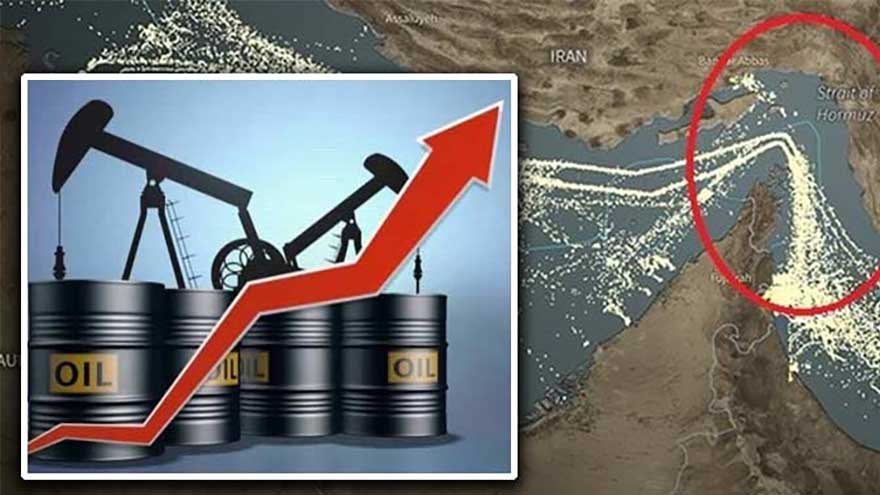
NEW YORK (Reuters) – Oil prices were mixed on Tuesday with Brent futures flat, while US crude remains on track for its highest close since 2022, ahead of a deadline set by US President Donald Trump for Iran to open the Strait of Hormuz or face attacks on power plants and other infrastructure.
Brent futures fell 29 cents, or 0.3%, to $109.48 a barrel at 11.59 a.m. EDT (1559 GMT), while US West Texas Intermediate crude rose $2.58, or 2.3%, to $114.99.
Typically WTI trades at a discount to Brent, but this has reversed in a market where barrels for earlier delivery command a higher price. The benchmark WTI contract is for May delivery while Brent is for June.
WTI was on track to close at its highest level since June 2022 for a fourth day in a row. At the end of March, when the Brent front-month was for delivery in May, Brent also closed at its highest since June 2022.
"WTI crude is ... extending gains as the market leans further into a prolonged disruption scenario rather than a near-term resolution," analysts at energy consulting firm Gelber & Associates said.
At the same time, the premium of the WTI front-month over the second-month was on track to close at a record high for a third day in a row.
"Time spreads have continued to widen, signalling that the tightness is most acute in the prompt market as refiners compete for immediately available barrels," analysts at Gelber said.
European and Asian refiners are paying record-high prices of near $150 a barrel for some crude oil grades, far exceeding prices for paper futures, highlighting the worsening supply crisis from the US-Israel war on Iran.
"WHOLE CIVILIZATION WILL DIE TONIGHT"
President Trump threatened that "a whole civilization will die tonight" as Iran showed no sign of accepting his ultimatum to open the Strait of Hormuz by Tuesday evening, Washington time. The strait handles about 20% of global oil and liquefied natural gas flows.
Trump has given Iran until 8 p.m. in Washington, 3:30 a.m. in Tehran, to end its blockade of Gulf oil or see the US destroy every bridge and power plant in Iran. Iran says it would retaliate against US allies in the Gulf, whose desert cities would be uninhabitable without power or water.
Efforts to facilitate talks between the US and Iran are ongoing, two Pakistani sources with knowledge of the discussions told Reuters on Tuesday.
As the clock ticked down on Trump's deadline, strikes on Iran intensified throughout the day, hitting railway and road bridges, an airport and a petrochemical plant and knocking out power lines, according to Iranian media.
Explosions were reported on Kharg Island, home to Iran's oil export terminal, which Trump has openly mused about destroying or seizing.
Iran, meanwhile, attacked Saudi Arabia's Jubail petrochemical complex, the heart of the kingdom's downstream sector, Iran's Revolutionary Guards said, the latest evidence of Tehran's ability to strike back in response to U.S.-Israeli attacks.
FINANCIAL WINDFALL FOR SOME
Disrupted exports from Gulf oil producers have sent oil prices soaring. This has meant a financial windfall for those still able to export - Iran, Oman and Saudi Arabia - while other states have lost billions of dollars, a Reuters analysis found.
OPEC+ oil producing nations agreed on Sunday to raise their May oil output quotas by 206,000 barrels per day, though the increase will be largely notional as key members cannot boost production because of the Hormuz closure.
Crude exports from Saudi Arabia's Red Sea port of Yanbu fell by about 15% week-on-week to average nearly 3.9 million bpd in the week beginning March 30, shipping data from LSEG and Kpler showed.
Iraq could restore crude oil exports to around 3.4 million bpd within a week provided the Iran war ends and the Strait of Hormuz reopens, the head of the country’s state-run Basra Oil Company said.