Summary Fiscal reforms, tax relief and structural adjustments outlined in new budget
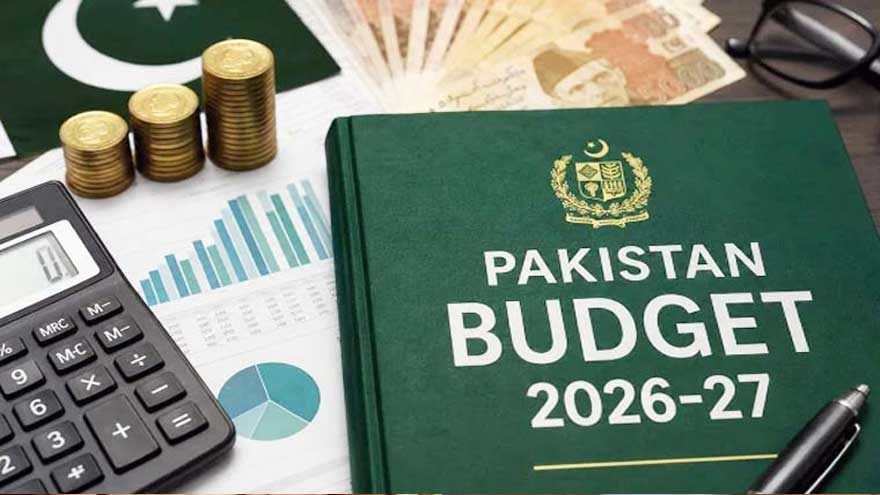
ISLAMABAD (Dunya News) – Finance Minister Muhammad Aurangzeb on Friday presented the federal Budget 2026-27 with a total outlay of Rs18,771 billion, describing it as a balancing act shaped by economic pressures, energy constraints and ongoing geopolitical tensions in the Middle East.
Delivering his third budget speech in the National Assembly, the minister said Pakistan’s economic trajectory had improved due to policy discipline, stronger fiscal management and renewed international confidence. He noted that the country had “achieved recognition globally as a nation whose voice is heard and whose partnerships are sought”.
The session was marked by noisy protests from opposition members, placards displayed in the House, and occasional scuffles between treasury and opposition benches, while the government highlighted economic stabilisation and reform measures.
Follow our detailed Budget reporting for real-time updates, key highlights and breaking developments from Budget 2026-27 as they unfold.
DEFENCE
The budget’s largest allocation has gone towards debt servicing, with Rs8.054 trillion earmarked for mark-up payments, underscoring the continued fiscal pressure of public borrowing. Defence spending has been set at Rs3 trillion, reflecting regional security considerations and the government’s emphasis on maintaining military preparedness.
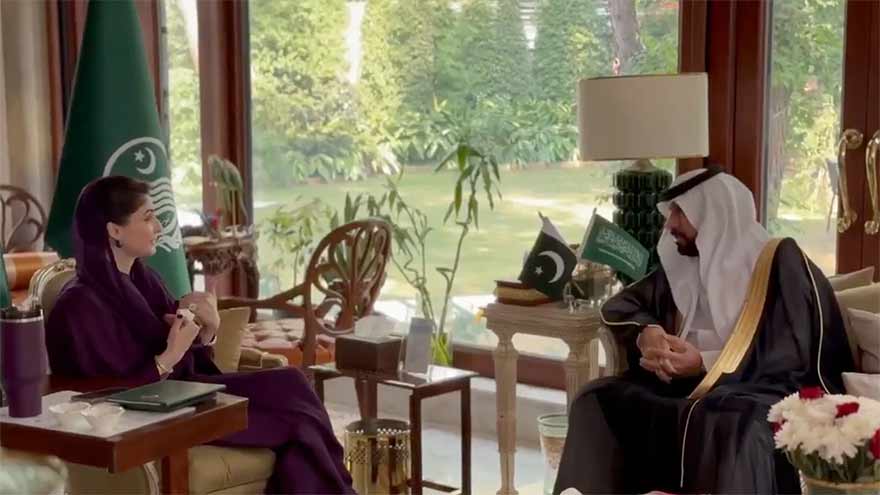
The finance minister said Pakistan’s defence capability had strengthened international standing and even contributed to diplomatic influence in certain regional developments. He also highlighted a defence pact with Saudi Arabia and Pakistan’s role in facilitating dialogue in regional conflicts.
Aurangzeb added that defence strength had also translated into strategic and economic value, strengthening foreign partnerships and boosting confidence among allies.
DEVELOPMENT PROGRAMME
The Public Sector Development Programme (PSDP) has been set at Rs3,675 billion, including Rs1 trillion for federal development projects, Rs2,224 billion for provincial initiatives, and Rs451 billion for state-owned enterprises.
The minister said development priorities had shifted under the 18th Constitutional Amendment, with provinces managing most social sector projects while the federation focuses on strategic infrastructure. Over 60% of federal development spending will go into transport, communication, water resources and energy, while IT, agriculture, education and health also remain key focus areas.
Calculate your taxes easily with our updated Tax Calculator
Within the development plan, Rs54.6 billion has been allocated for sustainable urban development and housing. The government aims to construct 150,000 affordable, climate-resilient housing units, alongside digital master planning for 10 major cities and upgrades in urban water and sanitation systems.
ECONOMIC PERFORMANCE
Aurangzeb said Pakistan’s macroeconomic indicators had shown steady improvement. The fiscal deficit has declined from 7.8% of GDP in June 2023 to an expected 4% by the end of the current fiscal year, while the country has moved from a primary deficit of 0.7% to a surplus of 1.6%.
Inflation is projected at around 7%, slightly lower than the previous estimate, despite global pressures linked to geopolitical tensions. The finance minister said recent inflationary spikes were externally driven and expected to ease once global conditions stabilise.
The tax-to-GDP ratio has increased from 8.5% to 10.3% over three years, reflecting improved revenue mobilisation and enforcement reforms.
ENERGY SECTOR
Energy reforms remained a central pillar of the budget strategy, with the government reporting over Rs143 billion in savings in power subsidies during FY2025-26.
Authorities also claimed the elimination of fresh circular debt accumulation in the electricity sector, marking a significant structural shift. A direct subsidy mechanism is set to be launched from January, targeting improved transparency in energy support distribution.
The government also renegotiated LNG agreements, reducing 35 cargo shipments in 2026 and saving approximately $1.2 billion in foreign exchange. Domestic gas production has also been expanded with an additional 100mmcfd added to the national system.
TAX RELIEF & BUSINESS REFORMS
The budget introduced targeted relief for salaried individuals across four income slabs, reducing tax rates significantly to ease inflationary pressure on middle-income groups.
For higher income earners, tax rates have been reduced across multiple brackets, while the government has abolished the super tax ranging between 1% and 7.5% on business income up to Rs500 million. For higher earnings above Rs500 million, the rate has been reduced from 10% to 8%.
Officials said the measures are aimed at improving business confidence, supporting industrial growth and encouraging compliance, while keeping surcharges intact for specific sectors including banking, oil and gas, and fertilisers.
HEALTH & EDUCATION
Health and education received increased allocations in the development programme, with Rs25.1 billion earmarked for healthcare projects. These include expansion of tertiary care hospitals, enhanced emergency services, cancer treatment facilities, disease surveillance systems and regulatory upgrades.
Higher education funding has been raised to Rs46 billion, up from Rs34.9 billion, marking a notable increase. The allocation covers scholarships, university research development, digital education expansion and upgrades to the Pakistan Education and Research Network.
An additional Rs3.6 billion has been allocated for science and technology to support innovation, technology transfer and sectoral modernisation across agriculture, health and renewable energy.
PRIVATISATION & CORPORATE SECTOR
The government reported strong growth in corporate profitability and capital market activity, with listed companies recording a 22% rise in profits in early 2026 compared to the same period last year.
A total of 11 IPOs have been launched during the year, the highest in two decades, while 39,000 new companies were registered with the Securities and Exchange Commission of Pakistan.
Major privatisation milestones include the sale of First Women Bank and the Rs185 billion auction of Pakistan International Airlines, which was handed over to the private sector through a live-televised process.
A five-year privatisation roadmap includes DISCOs, GENCOs, banks, insurance firms and airports.
GOVERNANCE & FISCAL FRAMEWORK
The finance minister said fiscal stability had improved due to policy coordination between federal and provincial governments, with revenue-sharing mechanisms maintained under the National Finance Commission award.
He added that Pakistan’s economy had grown to $452 billion, remittances were projected to exceed $41 billion, and foreign exchange reserves had risen to $17 billion, providing import cover for around three months.
The government also highlighted rising investor confidence, improved stock market participation, and expanding foreign interest in Pakistan’s technology and corporate sectors, with global firms including Google expanding operations in the country.