Summary rime Minister Shehbaz Sharif has approved the Auto Policy 2026-31 in principle, proposing lower hybrid vehicle duties, investment incentives and environmental levies on larger vehicles.
ISLAMABAD0 (Dunya News) – Prime Minister Shehbaz Sharif has given in-principle approval to Pakistan’s proposed Auto Policy 2026-31, paving the way for further consultations and formal approvals before the new framework is implemented, according to sources.
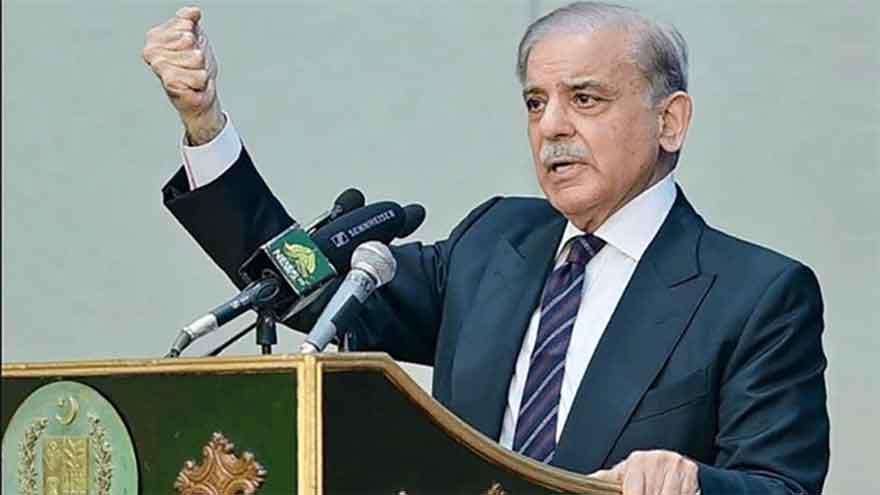
The draft policy, which had remained under consideration for some time, was discussed at a meeting chaired by the prime minister on Wednesday.
Sources said the proposed framework would now be shared with the International Monetary Fund (IMF) before being taken to the Economic Coordination Committee (ECC) and subsequently the federal cabinet for approval.
The policy is aimed at creating a more favourable environment for investment in Pakistan’s automobile industry, increasing localisation, promoting vehicle exports and encouraging adoption of modern automotive technologies.
A significant part of the proposed framework focuses on hybrid vehicles, with the government considering phased reductions in duties and taxes over the five-year policy period.
According to sources familiar with the draft, duties on certain categories of hybrid vehicles are proposed to be reduced from the existing 50% to 30% over five years.
The proposal covers hybrid vehicles in different engine-capacity categories, including vehicles up to 800cc and those between 851cc and 1,000cc.
The draft also proposes phased duty reductions for larger hybrid vehicles.
For hybrid vehicles with engine capacities between 1,501cc and 1,800cc, the duty is proposed to decline from 50% to 30%. A similar phased reduction from 50% to 30% has been proposed for hybrid vehicles above 1,800cc, according to the sources.
Commercial transport is also expected to receive incentives under the proposed framework.
The draft reportedly proposes reducing duty on hybrid trucks from 30% to 15%, while duty on hybrid commercial vehicles could be lowered from 60% to 30%.
Hybrid buses could also receive substantial relief, with their duty proposed to be cut from 30% to 15%.
If approved in its present form, the measures could encourage greater penetration of hybrid technology in Pakistan at a time when the automobile sector is gradually shifting towards more fuel-efficient and lower-emission vehicles.
The policy, however, also proposes an environmental levy on larger vehicles as part of a mechanism to generate resources for the sector.
According to sources, a 10% environmental levy has been proposed for vehicles with engine capacities between 2,001cc and 3,000cc, while vehicles of 3,001cc and above could face a 19.5% levy.
The government estimates that the proposed environmental levy could generate approximately Rs142.79 billion over five years.
Revenue generated through the levy is proposed to be directed towards export promotion and research and development, potentially creating a dedicated funding stream for technological development and international expansion of Pakistan’s automotive industry.
The proposed structure indicates an attempt to combine gradual tariff rationalisation with measures intended to promote cleaner technology, exports and local industrial development.
The policy could have significant implications for automobile manufacturers, assemblers, parts producers, importers and consumers.
For local manufacturers, much will depend on the final localisation requirements, tariff structure and incentives for investment and exports. Consumers, meanwhile, could potentially benefit from greater competition and wider availability of hybrid vehicles if the proposed duty reductions ultimately translate into lower market prices.