Summary Punjab’s National Health Support Program reviewed progress in healthcare training, digital learning, referral services and newborn care with the World Bank.
LAHORE (Web Desk) – The National Health Support Program (NHSP), Punjab, presented progress on healthcare workforce development, digital learning, integrated referral services and newborn care during the 8th World Bank Implementation Support Mission (IMS), highlighting interventions aimed at strengthening primary healthcare and improving the continuity and quality of essential health services across the province.
Dr Sherin Varkey, Regional Practice Manager (Health) for the World Bank’s MENA-AP Region, who spearheaded the mission, appreciated the Punjab government’s health reform agenda and progress in strengthening primary healthcare services. He acknowledged Chief Minister Maryam Nawaz Sharif’s vision in setting the strategic direction for health sector reforms, Health Minister Khawaja Imran Nazir’s leadership in advancing these priorities, and the institutional leadership and oversight of Health & Population Department Secretary Ms Nadia Saquib.
Dr Varkey also commended the Health & Population Department team for translating the government’s reform vision into practical interventions and the NHSP Punjab Project Management Unit (PMU) for providing technical support to advance the reforms. He noted that these collective efforts were helping extend the benefits of improved primary healthcare services to communities at the grassroots level.
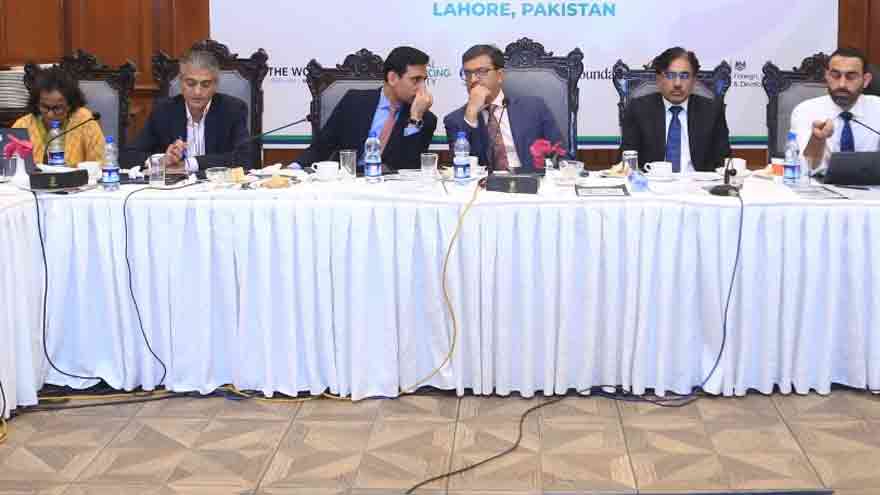
The progress review meeting was jointly chaired the World Bank (TTL & SHE) Jahanzaib Sohail and Additional Secretary (Admn.)/Program Director, NHSP, Punjab, Muhammad Ashraf. Representatives of the World Bank, the Health & Population Department, Government of Punjab, and aligned development partners participated in the meeting to review implementation progress and discuss key health-sector reforms.
During the meeting, Capt. (Retd.) Dr Usman Ali Khan briefed the mission on the programme’s support to the Health & Population Department and progress on key interventions. A major area of discussion was competency-based training for healthcare providers, which aims to strengthen practical skills and improve the delivery of essential health services. The approach focuses on job-specific competencies and the application of knowledge and skills in clinical settings.