Summary The lawyer informed the court that opponents were occupying 40 acres of property in Depalpur
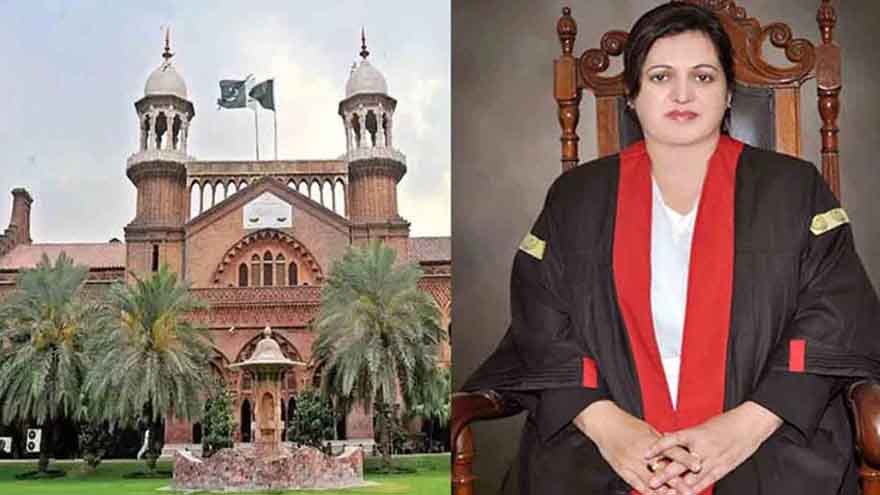
LAHORE (Dunya News) – During the hearing of a petition challenging actions taken under the Property Ownership Act, Chief Justice Aalia Neelum of the Lahore High Court (LHC) issued strong remarks and ordered the immediate restoration of possession obtained through DRC (Dispute Resolution Committee) proceedings.
The chief justice heard a petition filed by Muhammad Ali, during which the individual who had obtained possession under the Property Ownership Act also appeared before the court. During the hearing, the chief justice questioned the lawyer representing the party in possession, asking how he could defend an unlawful decision.
The lawyer argued that committees formed under deputy commissioners (DCs) had exceeded their authority. In response, the chief justice remarked that possession must first be returned, after which further proceedings could continue. She also questioned why action should not be initiated against the committee members.
Chief Justice Aalia Neelum observed that the lawyer himself was admitting that the DCs had exceeded their powers. She remarked that had the patwari performed his duties properly, the matter would not have arisen, adding that bypassing the system leads to such problems.
During the hearing, the lawyer argued that if people do not receive justice through the system, where else should they go? The chief justice responded by saying that courtroom dialogue should not be delivered for newspaper headlines, and added that she was well aware of how many old cases were pending in the courts.
The lawyer informed the court that opponents were occupying 40 acres of property in Depalpur, while counsel for the opposing side stated that DRC committees had handed over possession within 27 days. The chief justice then questioned who had actually passed the order for taking possession.
Chief Justice Aalia Neelum declared that a committee’s order granting possession amounted to misconduct. When the lawyer admitted that the DCs had made an incorrect decision, the chief justice remarked that he was himself acknowledging that they did not even have the legal authority to pass such orders.
The court clarified that the deputy commissioner was not authorized to decide such matters. It emphasized that the real issue was not whether the petitioner owned the property, but whether DCs had the legal power to issue such decisions in the first place.