Summary During the visit, President Pezeshkian will hold formal talks with Pakistan’s top leadership, including meetings with President Asif Ali Zardari and detailed discussions with PM Shehbaz Sharif.
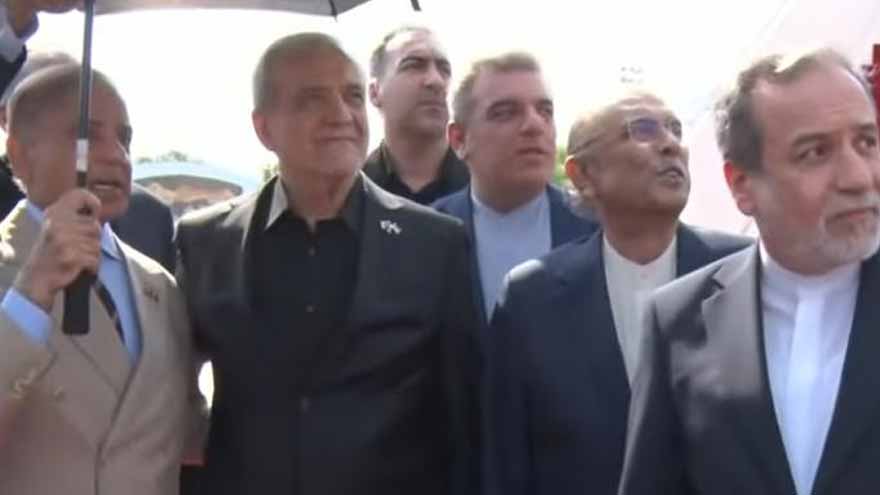
ISLAMABAD (Dunya News) - Iranian President Masoud Pezeshkian arrived in Islamabad on Tuesday for a one-day official visit, following Pakistan-mediated talks between Iran and the United States held in Switzerland.
Pezeshkian arrived aboard a special aircraft operated by Mirage Airlines, named Minab 168, which Iranian officials said commemorates the 168 children killed in an attack on a school in Iran's Minab city.
Prime Minister Shehbaz Sharif, President Asif Ali Zardari, and other senior Pakistani officials welcomed the Iranian president at the airport. Iranian Foreign Minister Abbas Araghchi was also part of the visiting delegation.
The visit marks Pezeshkian's first foreign trip since the United States and Israel launched military strikes on Iran on February 28.
Foreign Office confirms that the visit marks Masoud Pezeshkian’s second trip to Pakistan in his capacity as President, underlining the continuity of dialogue between the two neighbouring countries. The programme has been designed to facilitate wide-ranging discussions at multiple levels of leadership in Islamabad.
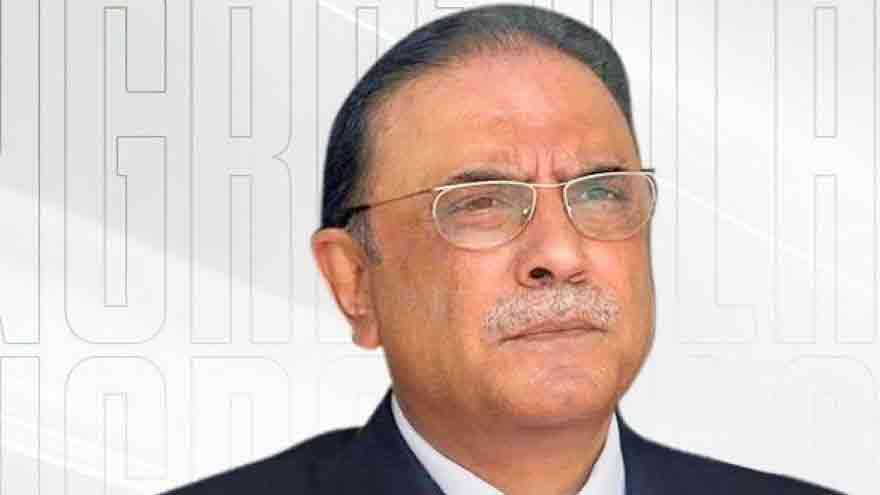
During the visit, President Pezeshkian will hold formal talks with Pakistan’s top leadership, including meetings with President Asif Ali Zardari and detailed discussions with PM Shehbaz Sharif.
The engagement will also include calls on the Chairman of the Senate, the Speaker of the National Assembly, and the Deputy Prime Minister and Foreign Minister, reflecting the breadth of institutional interaction planned during the visit.
Both sides are expected to review the full spectrum of bilateral relations, with particular emphasis on expanding cooperation in trade, energy, border security, people-to-people exchanges, and regional connectivity. The discussions are set to focus on practical avenues to strengthen economic linkages and facilitate smoother cross-border collaboration.
A key focus of the talks will be the continued implementation and follow-up of understandings reached through the Islamabad Memorandum of Understanding. Officials from both countries are expected to assess progress and identify further steps to advance agreed areas of cooperation.
Energy cooperation and trade facilitation remain central pillars of the Pakistan-Iran relationship, with both sides aiming to explore new mechanisms to enhance connectivity and economic engagement. Border security coordination is also expected to feature prominently, alongside efforts to boost cultural and social exchanges.
Beyond bilateral matters, the two sides are expected to exchange views on key regional and international developments of mutual concern. The discussions will provide an opportunity to align perspectives on evolving geopolitical dynamics and promote coordinated approaches to regional stability.
The visit is being viewed as part of ongoing diplomatic efforts to reinforce longstanding historical and cultural ties between Pakistan and Iran, while supporting broader goals of peace, stability, and sustainable development across the region.