
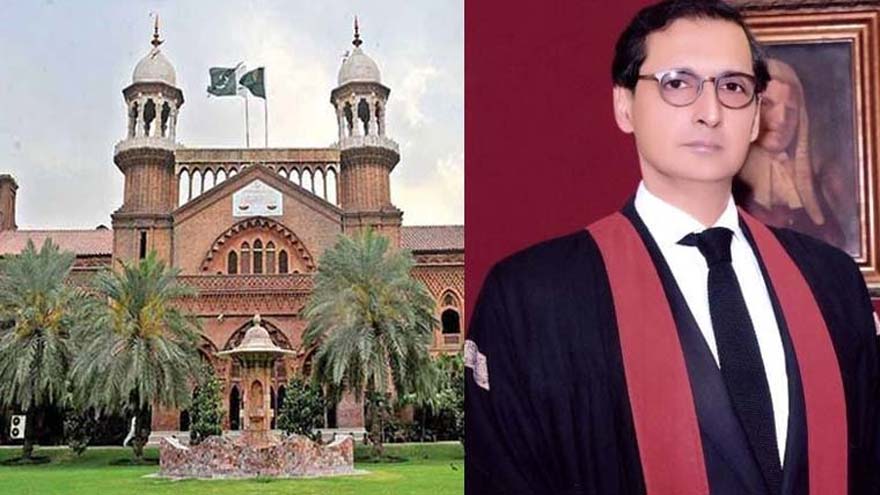
Summary Justice Javed Hassan heard a petition filed by Ghazi Khan, brother of Prime Minister’s Adviser Haroon Akhtar Khan, and disposed of the case with directions to the relevant authorities.
LAHORE (Muhammad Ashfaq) – The Lahore High Court has declared it unlawful to disconnect a separate domestic electricity connection to recover outstanding dues allegedly linked to an industrial connection.
Justice Javed Hassan heard a petition filed by Ghazi Khan, brother of Prime Minister’s Adviser Haroon Akhtar Khan, and disposed of the case with directions to the relevant authorities.
The court directed the concerned authorities to treat the petition as a representation, provide all relevant parties, particularly the petitioner, with an adequate opportunity of hearing, and issue a reasoned order in accordance with the law.
The court also directed the authorities to decide the matter within two weeks.
The petitioner’s counsel argued that his client had a separate residential electricity connection with its own meter, reference number, billing record and payment history. The alleged outstanding dues, the lawyer said, related to a separate industrial connection of M/s Superior Textile Mills Limited.
According to the counsel, the petitioner had been regularly paying all bills for his domestic connection. Therefore, alleged dues relating to an industrial connection could not be imposed on or recovered through his separate residential connection.
The lawyer further argued that under Section 24 of the Electricity Act, 1910, legal requirements must be fulfilled and the prescribed notice issued before electricity can be disconnected. No outstanding amount was payable against the petitioner’s residential connection, nor had he been served any legal notice regarding disconnection, he maintained.
Citing various judicial precedents, the counsel contended that an electricity connection at a separate premises could not be disconnected to recover dues attributed to another consumer, even if both connections belonged to the same individual.
The lawyer maintained that disconnecting electricity without notice and following due legal procedure was unlawful and that no action could be taken against a citizen’s electricity meter without providing an opportunity of hearing.
He also argued that the alleged industrial dues themselves were disputed and proceedings regarding them were already pending before the relevant forum. Therefore, the disputed amount could not be treated as final or admitted dues and used as a basis for coercive action against a separate residential connection.
The counsel alleged that threats to disconnect the domestic electricity supply for recovery of industrial dues amounted to an unlawful and coercive exercise of authority. He argued that electricity was a basic necessity of life and was linked to the right to life guaranteed under Article 9 of the Constitution.
The petitioner also invoked Articles 4 and 10-A of the Constitution, arguing that every citizen has the right to be treated in accordance with law and to due process. He maintained that taking action without fulfilling legal requirements while the matter was pending could cause irreparable harm.
Justice Javed Hassan observed that it was appropriate to give the relevant authorities an opportunity to reconsider the matter in light of the petitioner’s request.
The court forwarded the petition and accompanying documents to the concerned respondent and directed the authority to treat them as a representation, decide the matter in accordance with law and take relevant judicial precedents into consideration.
Meanwhile, the court restrained the authorities from taking any coercive action against the petitioner until a decision is made on his representation.
The court subsequently disposed of the petition and directed that a copy of the order be provided to the petitioner upon payment of the prescribed fee.