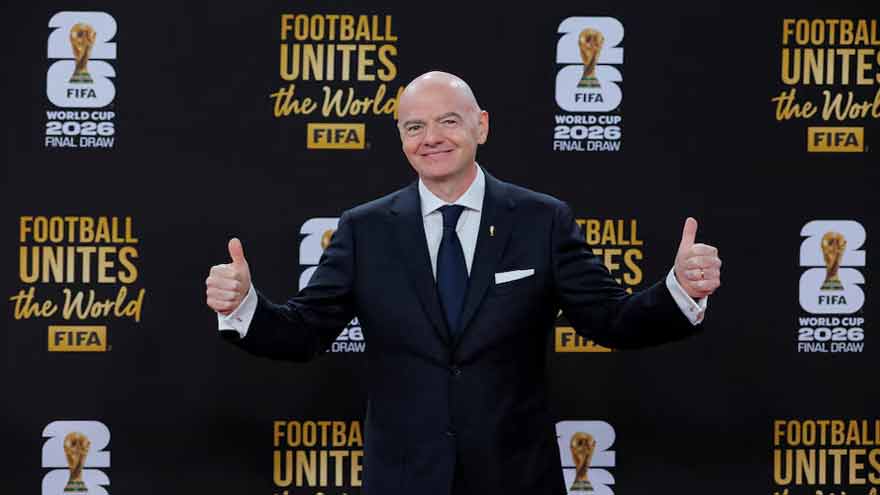
Summary FIFA scrapped its World Cup rights stake sale after backlash over poor consultation, prompting fresh transparency demands and raising doubts over Gianni Infantino's re-election bid.
(Reuters) - FIFA faced renewed calls for transparency on Saturday after it abruptly shelved plans to sell a stake in the commercial rights to the World Cup, a proposal that triggered fierce backlash from regional confederations that said they had been blindsided.
The swift reversal has exposed growing unease within world soccer over FIFA President Gianni Infantino's leadership style, with football officials demanding greater oversight of decisions that could reshape the governance and commercial future of the sport.
The backlash has also raised questions about Infantino's political capital as he prepares to seek another term in office.
FIFA's plan was to raise up to $4.2 billion by selling about a 20% stake to private investors in a new unit that would run FIFA events, including the World Cup.
The plan, announced on Tuesday, quickly ran into a storm of opposition from regional confederations, which complained they had not been consulted on a move that could alter the commercial structure of world football.
Following the backlash, Infantino said world soccer's governing body had abandoned the plans after listening "carefully to all the views".
The Asian Football Confederation's President Sheikh Salman bin Ebrahim Al-Khalifa on Saturday welcomed FIFA's reversal.
Bahrain's Sheikh Salman wrote he expects "any initiative that has the potential to impact global football will be presented and discussed with the Confederations, the FIFA Council, Member Associations and other stakeholders in a timely, transparent and meaningful manner."
"The future of global football must always be shaped through proper consultation, collective dialogue and respect for the established governance structures of our game."
SOME PRINCIPLES 'SHOULD NEVER CHANGE'
Football Australia chairman Anter Isaac struck a similar note, backing innovation while warning against bypassing core governance principles.
"Football has never stood still, nor should it," Isaac said.
"Some principles, however, should never change. Integrity. Independence. Good governance. Transparency. Meaningful consultation. Due process."
"These are not constraints on progress. They are what make lasting progress possible."
INFANTINO'S RE-ELECTION HOPES DAMAGED, SAY EXPERTS
The controversy comes at an awkward moment for Infantino, who said in April he intends to seek re-election for a fourth term as FIFA president. Since taking over from Sepp Blatter in 2016, he has been re-elected unopposed twice and appeared firmly in control of the organisation.
While his re-election for the 2027-31 term had appeared a formality, experts told Reuters the backlash surrounding the failed proposal had exposed dissatisfaction among some FIFA members and could complicate his path ahead of next year's FIFA Congress in Morocco.
"He's obviously been kind of egomaniacal in everything that he's done. I know that he's rubbed many of the member associations the wrong way with some of his decisions," Bob Dorfman, a sports marketing analyst, said.
"Some of the countries that have been awarded World Cups have been kind of questionable. Politics has gotten involved in this a little too much."
The speed of the turnaround has been particularly striking, coming less than two weeks after Infantino was toasting the most commercially successful World Cup in history.
"It's hard to think of a situation where a person's political fortunes changed so rapidly," said economist Victor Matheson, a sports business expert at the College of the Holy Cross.
"Again, as close as two weeks ago, he's riding, you know, on top of the world, the most successful sports mega event in the history of this planet.
"And just two weeks later, he's fighting for his political life."