Summary As Tunisia prepares to mark the January anniversary of the 2011 revolution, which sparked the Arab Spring uprising, tensions have risen amid protests, and a UGTT union call for a strike next month
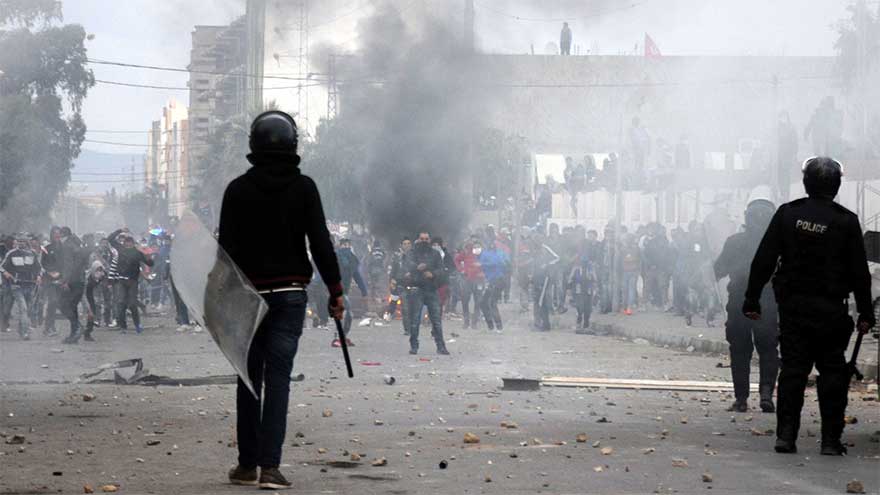
TUNIS (Reuters) – Clashes erupted for a second night on Saturday between police and youths in the central Tunisian city of Kairouan after a man died following a police chase, according to his family, fuelling authorities’ fears that protests could spread across the country.
As Tunisia prepares to mark the January anniversary of the 2011 revolution, which sparked the Arab Spring uprising, tensions have risen amid protests, and a powerful UGTT union call for a nationwide strike next month.
Thousands have been protesting for weeks in the southern city of Gabes, demanding the closure of a chemical plant on environmental grounds.
Witnesses said demonstrators in Kairouan threw stones, petrol bombs and flares, and blocked streets by burning tyres, prompting police to disperse crowds with tear gas.
The family said the man, riding a motorcycle without a license, was chased by police, beaten, and taken to a hospital. He later fled and died on Friday from a head injury.
The government was not immediately available to comment. Relatives of the deceased said they will not remain silent and will spark major protests if those responsible are not held accountable.
In a bid to defuse tensions, Kairouan's governor visited the family on Saturday evening and pledged to open an investigation to determine the circumstances of the death and establish accountability, witnesses said.
Tunisia President Kais Saied shut down parliament and began ruling by decree in 2021 in what he called a move to root out rampant corruption and mismanagement, but which the opposition called a coup.
Rights groups accuse Saied of using the judiciary and police to stifle criticism, something that Saied denies.
OPPOSITION JOINS PROTEST AGAINST PRESIDENT
Meanwhile, activists and opposition figures from across Tunisia's political spectrum took to the streets in a rare show of unity against President Kais Saied, demanding an end to one-man rule and the restoration of democracy.
The protest followed three weeks of demonstrations and underscored growing momentum among opposition groups and civil society against what they describe as Saied’s unprecedented crackdown on critics.
Hundreds marched through the capital carrying portraits of jailed politicians, journalists and activists, turning the protests into a weekly showdown between Saied and his opponents.
Rights groups say Saied has eroded freedoms and turned Tunisia into an "open-air prison" since taking extraordinary powers in 2021 and ruling by decree. Saied rejects the accusations, saying he is cleansing the country of traitors and a corrupt elite.
The breadth of participation on Saturday from across different political currents marked a shift from previous years, when political fragmentation blunted the opposition's ability to mobilise.
"Today, all opposition is in prison. The machine of dictatorship has spared no one, so unity in the streets has become a necessity, no longer a choice," protester Noura Amaira told Reuters.
Rights groups accuse Saied of using the judiciary and police to stifle criticism. Saied denies becoming a dictator or using the judiciary against opponents.
A court on Friday sentenced prominent opposition figure Abir Moussi to 12 years in prison, in what rights groups say is another step towards entrenching Saied's one-man rule.
Last month, an appeals court handed jail terms of up to 45 years to dozens of opposition leaders, business figures and lawyers on charges of conspiracy to overthrow Saied.
Police last week arrested opposition figures Chaima Issa, Ayachi Hammami and Nejib Chebbi in the same case, sparking a wave of criticism from local and international rights groups.
Also last month, three civil rights groups said authorities had suspended their activities over alleged foreign funding.