Summary Backchannel contacts have been accelerated, raising the possibility that the next round of negotiations could take place in Islamabad.
(Reuters/AFP) - Negotiating teams from the US and Iran could return to Islamabad later this week, five sources said on Tuesday, days after the highest-level talks between the two countries in decades ended without a breakthrough.
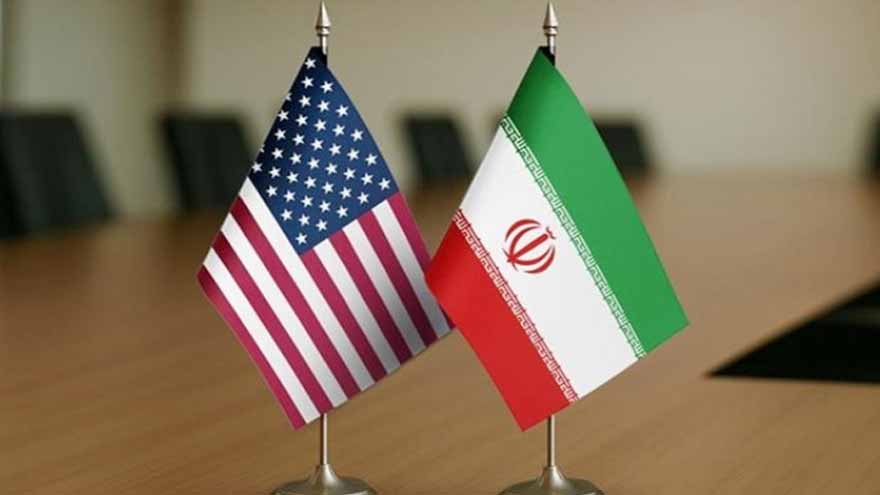
Pakistan hosted direct Iran-US talks in Islamabad over the weekend, marking the highest engagement between the two sides since 1979. Both delegations departed the capital on Sunday after the talks ended without an agreement, but also without a breakdown.
According to Reuters, a source involved in the talks said a date was not yet decided, but both countries could return as early as the end of this week. They said that a proposal has been shared with both the US and Iran to resend their delegates to resume the talks.
“No firm date has been set, with the delegations keeping Friday through Sunday open,” a senior Iranian source said.It is worth noting that the first phase of talks between the two sides was held on April 11 in Islamabad, lasting nearly 21 hours, but concluded without reaching any agreement.
Two Pakistani sources with knowledge of the talks said Islamabad was communicating with the two sides about the timing of the next round and the meeting would likely take place on the weekend.
“We have reached out to Iran and we got a positive response that they will be open to a second round of talks,” a senior Pakistani government official was quoted as saying by Reuters.
Similarly, a Pakistani source told AFP that Islamabad was working to bring Iran and the US back together for a second round of talks and to secure an extended ceasefire to allow for diplomacy.
“Efforts are underway to bring both parties back to the table, of course we want them back in Islamabad, but the venue is not final yet,” said the source, who requested anonymity due to the sensitivity of the subject matter.
“The meeting could take place soon, though dates have yet to be confirmed,” the source was quoted as saying.
The source added: “We are also working to get the ceasefire extended beyond the current deadline to allow for additional time.”
The immediate priority, they said, was to extend the ceasefire.
On Monday, Prime Minister Shehbaz Sharif told a meeting of the federal cabinet that “full efforts” were ongoing to resolve the conflict.
Noting that the truce was still holding, he said, “As I am talking to you, matters that are not resolved, full efforts are underway to resolve them.”
The ceasefire between the US and Iran, brokered on April 8 after weeks of conflict, is set to expire on April 22. While technically intact, it is increasingly precarious.
The US has moved toward enforcing a naval blockade of Iranian ports, prompting a warning from Tehran that such a move would be a violation of the ceasefire.
US says ball in Iran’s court
Meanwhile, US Vice President JD Vance said “the ball is in the Iranian court” on ending the Mideast war.
Vance had left talks hosted by Pakistan on Sunday, saying he had handed Tehran the “final and best offer”.
“I really think the ball is in the Iranian court, because we put a lot on the table. We actually made very clear what our red lines were,” Vance said in an interview with Fox News on Monday.
Washington has “no flexibility” on US control of Iran’s enriched uranium, and a verification mechanism to ensure it does not develop a nuclear weapon in the future.
“It’s one thing for the Iranians to say that they’re not going to have a nuclear weapon. It’s another thing for us to put in place the mechanism to ensure that’s not going to happen,” Vance said.
US President Donald Trump insisted Iranian representatives had called Washington since a US delegation returned empty-handed from negotiations in Islamabad.
“I can tell you that we’ve been called by the other side. They’d like to make a deal. Very badly, very badly,” Trump told reporters outside the Oval Office on Monday.