Summary Two-day negotiations focus on tariffs, investment and economic cooperation
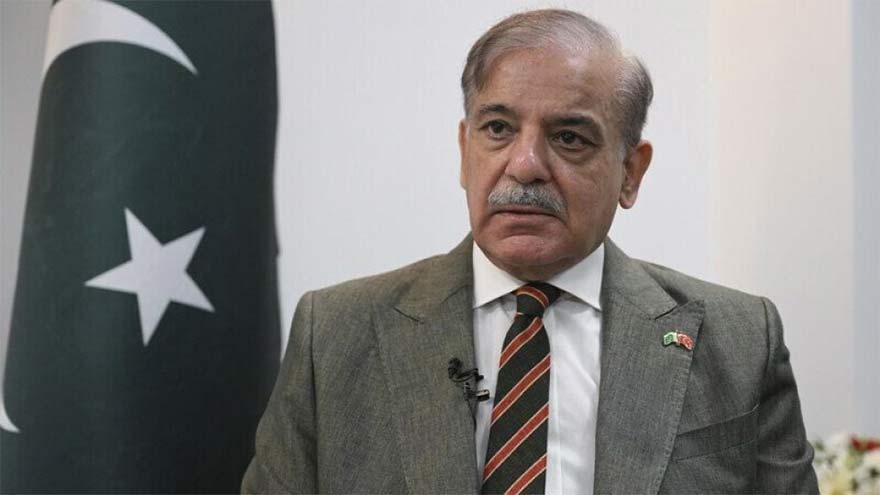
WASHINGTON/ISLAMABAD (Web Desk) – Pakistan and the United States have made significant progress in negotiations on a proposed reciprocal trade agreement following two days of high-level discussions in Washington DC, according to Foreign Office spokesperson Tahir Andrabi.
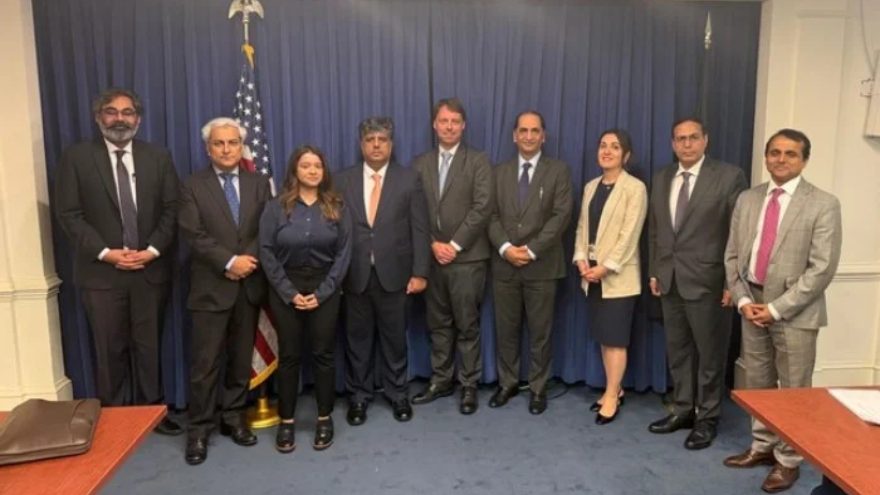
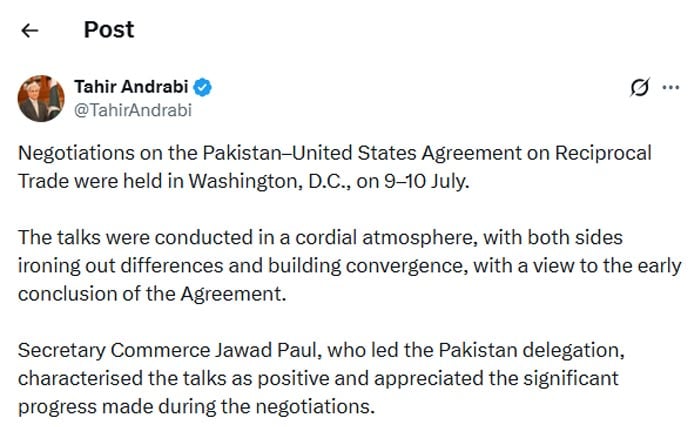
The talks, held on July 9 and 10, were led by Pakistan's Commerce Secretary Jawad Paul and focused on resolving tariff-related issues while expanding broader economic cooperation. Andrabi said the negotiations were conducted in a cordial atmosphere, with both sides narrowing differences and building convergence aimed at reaching an early agreement.
Sharing an update on X, Andrabi quoted Paul as describing the discussions as positive and welcoming the significant progress achieved during the latest round of negotiations.
The Pakistani delegation included Additional Secretary at the Ministry of Overseas Pakistanis and Human Resource Development Nadeem Chaudhary and Joint Secretary (Tariff Policy) Mohammad Ashfaq Khan, while officials from several other ministries joined the discussions virtually.
According to officials familiar with the negotiations, discussions extended beyond reciprocal tariff arrangements to cover cooperation in energy, information technology, mining, critical minerals, investment and other emerging sectors.
The latest engagement follows earlier discussions between Pakistani officials and the Office of the United States Trade Representative (USTR) on tariff concerns and commercial relations.
Pakistan has also submitted detailed responses to the USTR as part of ongoing Section 301 investigations covering nearly 60 countries over alleged forced labour and related trade practices. Another submission was made shortly before the Washington talks.
Tariff focus
Previous negotiations resulted in the proposed US reciprocal tariff on certain Pakistani exports being reduced from an initial 29 percent to 19 percent.
Pakistan and the United States had also reached a broader trade understanding last year aimed at increasing bilateral trade, expanding market access, attracting investment and strengthening cooperation in key economic sectors. The understanding included plans to reduce reciprocal tariffs while promoting collaboration in energy, minerals, information technology and cryptocurrency.
US President Donald Trump had also announced that both countries would work together on developing Pakistan's oil reserves as part of wider economic cooperation.
That earlier arrangement was later affected after the US Supreme Court ruled, by a 6-3 majority in February, that the White House had exceeded its constitutional authority in imposing sweeping tariffs under the International Emergency Economic Powers Act. The administration subsequently invoked Section 122 of the Trade Act of 1974 to introduce a temporary 10 percent global tariff for up to 150 days, with the measure due to expire on July 24.
The United States remains Pakistan's largest single-country export market, while Pakistan is the second-largest importer of US cotton, highlighting the importance of trade ties as both countries continue efforts to finalise the reciprocal agreement.