
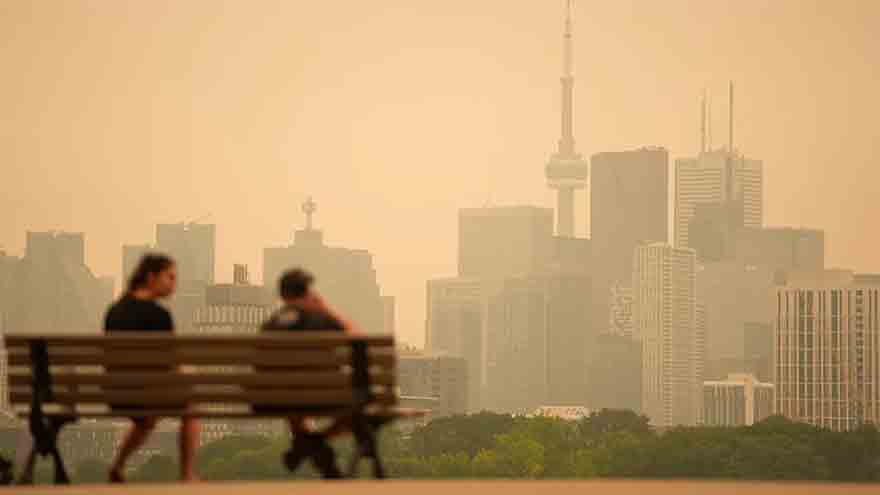
Summary Among the most concerning substances are tiny particles collectively known as particulate matter 2.5 (PM2.5).
(Web Desk) - Wildfires are becoming more frequent, extreme and destructive in the United States, as well as in neighboring countries like Canada.
Major wildfires leave a trail of destruction in their wake, putting people's lives at risk and forcing them to quickly evacuate their homes and businesses. Climate change is a major factor worsening these disasters, and it's expected to continue to worsen the situation in coming years.
One major health risk posed by wildfires is the smoke they produce. Wildfire smoke can have many harmful effects on the body, including on the lungs, heart and brain. Thankfully, there are certain measures that people can take to protect themselves, experts told Live Science.
Wildfire smoke contains a multitude of different chemicals that form as things burn, Sara Adar, a professor of epidemiology at the University of Michigan, told Live Science.
Among the most concerning substances are tiny particles collectively known as particulate matter 2.5 (PM2.5).
These particles are less than 2.5 micrometers in size — roughly 28 times smaller than the width of a human hair — and they can become trapped in the inner linings of the nose, mouth and eyes.
In the short term, this triggers irritation and other symptoms, such as burning eyes, a runny nose or cough, which can set in immediately after exposure.
People with skin conditions like eczema may also be more likely to experience flare-ups of their condition as a result of short-term exposure to PM2.5 during a wildfire.
On longer scales, these particles are small enough to be inhaled into the lungs and cause additional harm to the body, especially as they are absorbed into the bloodstream.
For example, they may trigger inflammation that aggravates respiratory conditions, such as asthma or chronic obstructive pulmonary disease (COPD).
This may occur right away or within a day or two of exposure to wildfire smoke, Dr. Stephanie Lovinsky-Desir, an associate professor of pediatrics in environmental health sciences at Columbia University in New York, told Live Science.