Summary Prime Minister Shehbaz Sharif has said the ceasefire agreement between Iran and the US, along with their allies, includes “Lebanon and elsewhere” and is effective immediately.
ISLAMABAD (Dunya News) – Prime Minister Shehbaz Sharif on Tuesday warmly welcomed ceasefire agreement between Iran and the US and invited both parties to Islamabad for further talks on April 10.
Prime Minister Shehbaz Sharif has said the ceasefire agreement between Iran and the US, along with their allies, includes “Lebanon and elsewhere” and is effective immediately.
With the greatest humility, I am pleased to announce that the Islamic Republic of Iran and the United States of America, along with their allies, have agreed to an immediate ceasefire everywhere including Lebanon and elsewhere, EFFECTIVE IMMEDIATELY.
— Shehbaz Sharif (@CMShehbaz) April 7, 2026
I warmly welcome the…
“I warmly welcome the sagacious gesture extend deepest gratitude to the leadership of both the countries and invite their delegations to Islamabad on Friday, 10th April 2026, to further negotiate for a conclusive agreement to settle all disputes,” Sharif wrote in a social media post.
He stressed that both parties have displayed “remarkable wisdom and understanding” and have remained constructively engaged in furthering the cause of peace and stability throughout this high-stakes mediation.
“We earnestly hope that the ‘Islamabad Talks’ succeed in achieving sustainable peace and wish to share more good news in coming days,” Sharif said.
Following the ceasefire, the Iranian Supreme National Security Council, in a statement, also announced that their armed forces would cease the “defensive operations” if attacks against Iran were halted. Besides, for a period of two weeks, safe passage through the Strait of Hormuz would be possible via coordination with Iran’s armed forces and with due consideration of technical limitations.
The Council also announced that the negotiations would be held in Islamabad to finalize the details.
“The negotiations will begin on Friday in Islamabad. Iran will allocate two weeks for these negotiations and the timeframe may be extended by mutual agreement of the two sides.”
Iranian Foreign Minister Seyed Abbas Araghchi also thanked PM Shehbaz Sharif and Field Marshal Syed Asim Munir for their tireless efforts seeking an end to the war in the region.
US Agrees to Ceasefire
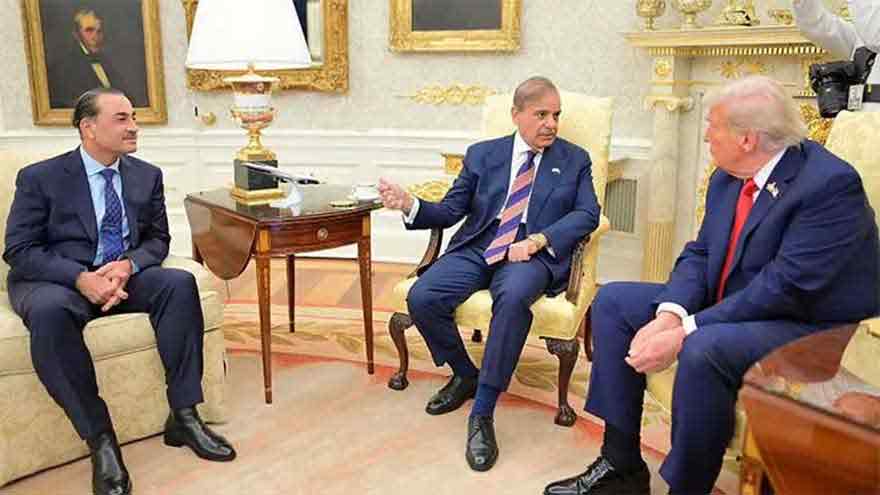
The United States has agreed to a two-week ceasefire with Iran proposed by Pakistan, President Trump said Tuesday night.
The Pakistani proposal, which came hours before Trump's deadline to launch massive strikes if no deal was reached, involves a pause on Trump's threat and a commitment from Iran to open the Strait of Hormuz for two weeks.
That two-week period would be used to negotiate a larger agreement to potentially end the war.
There have been discussions through mediators about potential in-person negotiations, likely to be led by Vice President Vance, though nothing has been announced.
The announcement comes less than 12 hours after Trump threatened to wipe out Iran's entire "civilization." More specifically, he threatened bridges, power plants and potentially oil and water infrastructure.
Negotiations between the US and Iran picked up momentum over the past 24 hours, with Pakistan serving as the primary mediator.
Israeli Prime Minister Benjamin Netanyahu, the leaders of Saudi Arabia and the UAE, and political allies like Sen. Lindsey Graham (R-S.C.) had urged Trump to reject any proposal unless Iran made major concessions.
Members of Trump's team, including Vance and envoy Steve Witkoff, have advised him to take a deal if they could get one.
“This will be a double sided ceasefire,” President Trump stated.
He said that the US had already met and exceeded all military objectives and was very far along with a definitive agreement concerning long-term peace with Iran and peace in the Middle East.
“We received a 10 point proposal from Iran, and believe it is a workable basis on which to negotiate. Almost all of the various points of past contention have been agreed to between the United States and Iran, but a two week period will allow the Agreement to be finalized and consummated,” the US President said.
Trump described the development as an honour on behalf of the United States of America and the countries of the Middle East, saying the long-term problem was close to resolution.
Subsequently, Iranian Foreign Minister Abbas Araghchi shared a statement on behalf of Iran’s Supreme National Security Council declaring that if attacks against the country were halted, it would cease its defensive operations.
Statement on behalf of the Supreme National Security Council of the Islamic Republic of Iran: pic.twitter.com/cEtBNCLnWT
— Seyed Abbas Araghchi (@araghchi) April 7, 2026
“On behalf of the Islamic Republic of Iran, I express my gratitude and appreciation for my dear brothers Prime Minister of Pakistan Sharif and Field Marshal Munir for their tireless efforts to end the war in the region,” he said.
“In response to the brotherly request of PM Sharif in his tweet, and considering the request by the US for negotiations based on its 15-point proposal as well as announcement by POTUS about acceptance of the general framework of Iran’s 10-point proposal as a basis for negotiations, I hereby declare on behalf of Iran’s Supreme National Security Council: If attacks against Iran are halted, our powerful armed forces will cease their defensive operations,” he said.
“For a period of two weeks, safe passage through the Strait of Hormuz will be possible via coordination with Iran’s armed forces and with due consideration of technical limitations,” he said.
Separately, Iran’s state-run PressTV outlined Tehran’s 10-point proposal, which it said the US had “accepted”.