Summary President reaffirmed the importance of bringing Iqbal’s ideas into national life and public conduct, saying true value of his concepts lies in their application in building a just and balanced society
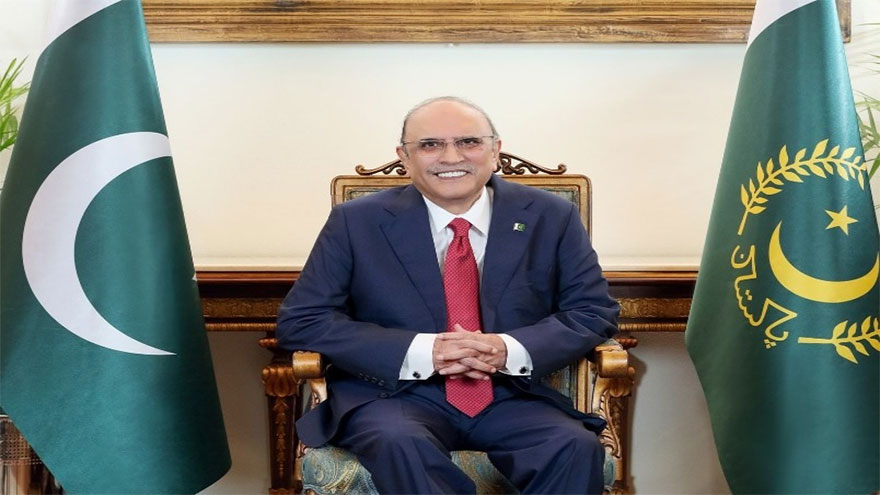
ISLAMABAD (Dunya News) - President Asif Ali Zardari reaffirmed the importance of bringing Iqbal’s ideas into national life and public conduct, saying true value of his concepts lies in their application in building a just and balanced society.
In a message on Iqbal Day (21 April 2026), he said, “Today, we pay tribute to Allama Muhammad Iqbal, the Poet of the East, a profound Muslim thinker and the visionary who gave intellectual direction to the idea of Pakistan. He was not only a great poet, but an intellectual, moral and spiritual force who guided the Muslim Ummah towards self-awareness, freedom of thought, self-respect and determined effort. At a time of decline and uncertainty, he rekindled the confidence of people and restored their belief in action and possibility.”
“Iqbal’s thought reflects a deep engagement with both Eastern and Western traditions. He drew upon this wide intellectual inheritance to present a forward-looking vision of society rooted in justice, dignity and human potential. His work also speaks about the rise of Asia and the reawakening of societies that had long remained under external dominance, offering a perspective that continues to resonate in the present century,” he added.
The President said, “At the heart of Iqbal’s message was a clear concern for fairness in economic and social life. He questioned systems in which those who labour are denied their due share and emphasised that the dignity of work must be matched by equity in outcome for the workers. His emphasis on fairness in economic and social life continues to hold relevance for shaping a just, humane and stable order.”
“The modern world continues to face serious challenges marked by conflict and division. In such circumstances, the thought of Allama Iqbal remains a living source of guidance. He called for love over hatred, justice over coercion and hope over despair. In his view, lasting peace depends not only on political arrangements, but on the reform of the individual and the strengthening of moral character,” he continued.
He quoted verses of Allama Iqbal who said “Adamiyyat ehtiram-e-adami, Bakhabar sho az maqam-e-adami. (Humanity lies in respecting the dignity of man; recognise the true station of man).”
“An important aspect of Iqbal’s thought is its relevance to all sections of society. For youth, he called for ambition and disciplined effort. For women, he emphasised a dignified and active role in society. For students, he linked knowledge with character and purpose. For ordinary citizens, he stressed honesty and self-reliance. At the centre of his message is the development of Khudi, a strong sense of self that enables individuals to act with confidence and responsibility,” he mentioned.
The President said, “Allama Iqbal viewed education as a means of intellectual and moral formation, not only a path to livelihood. His emphasis on character, responsibility and purposeful learning remains directly relevant to how we shape our educational and social systems. Knowledge must build character, awareness must bring responsibility and skills must serve the society. This approach is essential for building a stable, self-reliant and forward-looking Pakistan.”
“Iqbal’s intellectual stature is recognised beyond Pakistan. In Iran, where Persian literary tradition holds a central place, his poetry is regarded with deep respect. This reflects the depth and range of his thought, which speaks across cultures and societies,” he noted.
He said in another couplet Iqbal says, “Jahan-e tazah ki afkar-e tazah se hai numood, Ke sang o khisht se hote nahin jahan paida. (A new world comes into being through new ways of thinking; worlds are not created from stone and brick alone.)”