
Summary According to the judgment, writ petitions under Article 199 now fall exclusively under the jurisdiction of the FCC.
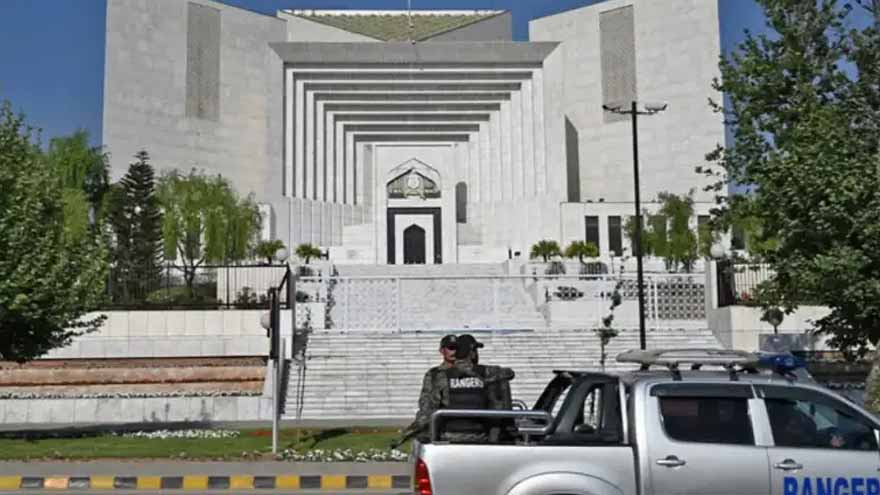
ISLAMABAD (Dunya News) - The Supreme Court of Pakistan has ruled that the Supreme Court and the Federal Constitutional Court (FCC) operate as “coordinate courts” with distinct constitutional jurisdictions, and neither is subordinate to the other.
Hearing multiple petitions, a two-member bench comprising Chief Justice Yahya Afridi and Justice Shahid Bilal Hassan clarified the post–27th Constitutional Amendment judicial framework, stating that both apex courts operate independently within their defined constitutional domains.
The Federal Constitutional Court was established under the 27th Constitutional Amendment in November last year, ensuring equal representation from all provinces. The ruling arose from a Peshawar High Court decision in which writ and regular civil proceedings had been combined and later brought before the Supreme Court.
The apex court ordered that such matters be separated and sent to their relevant forums under the new constitutional structure.
According to the judgment, writ petitions under Article 199 now fall exclusively under the jurisdiction of the FCC, while ordinary civil and appellate matters will continue to be heard by the Supreme Court under Article 185. Matters relating to rent and family disputes were noted as exceptions.
The court further explained that Article 175F, introduced through the 27th Constitutional Amendment, established a distinct appellate framework, transferring all appeals arising from Article 199 decisions to the FCC, except in specified categories.
It emphasized that the Supreme Court and FCC are “coordinate courts” operating in parallel constitutional spheres, with no appellate hierarchy between them. The judgment clarified that Article 189, which governs binding precedents, does not place one court above the other, and each institution’s rulings remain binding only within their legal scope.
The court warned that continuing to hear combined writ and non-writ cases could lead to jurisdictional overlap and conflicting judgments. To prevent this, it directed that all such pending matters be “de-clubbed” and sent to their appropriate forums.
Invoking judicial comity, the bench stressed that both courts must exercise restraint to avoid inconsistent rulings on overlapping legal issues.
In the present case, the Supreme Court retained jurisdiction over regular civil appeals, while transferring the writ petition to the FCC. It also ruled that contempt proceedings related to Supreme Court orders would remain within its jurisdiction, as such authority is tied to the dignity and enforcement of its own decisions.