
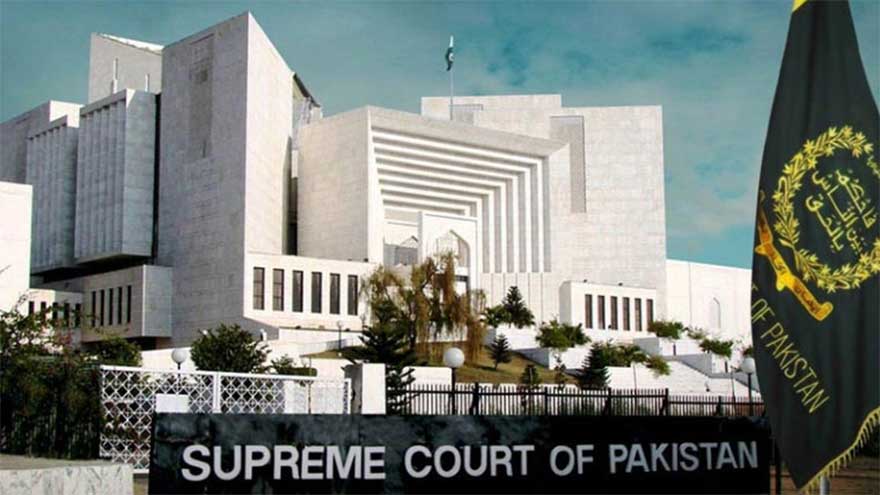
Summary A three-member bench headed by Chief Justice Yahya Afridi issued a detailed verdict on khula and domestic disputes, while the 12-page judgement was authored by Justice Shahid Bilal Hassan
ISLAMABAD (Dunya News) – Supreme Court of Pakistan has declared that a divorce through khula cannot be granted without the wife’s clear and unambiguous consent.
A three-member bench headed by Chief Justice Yahya Afridi issued a detailed verdict on khula and domestic disputes, while the 12-page judgement was authored by Justice Shahid Bilal Hassan.
The court ruled that if a woman files a case on the grounds of cruelty or abuse, converting it into a khula case could affect her financial rights. Therefore, the court said the wife must be given the option to decide whether she wishes to continue pursuing allegations of abuse or seek khula instead.
The judgement also adopted a broader definition of domestic violence, stating that it includes not only physical abuse but also mental torture, humiliation, pressure and deprivation. Emotional suffering, neglect and severe psychological distress were also recognised as forms of mental cruelty.
The Supreme Court directed family courts to avoid applying criminal standards of evidence in civil family disputes and instead decide cases by considering the facts, behaviour and circumstances surrounding domestic conflicts.
Referring to the case, the court observed that the marriage was solemnised on September 19, 2016, while the separation suit was filed on October 8, 2016. The court remarked that cruelty could occur even within a short period of marriage and that each case should be judged on its own facts.
The Supreme Court held that the wife failed to prove allegations of cruelty, therefore upholding the lower courts’ findings on that aspect. However, it noted that the marriage had effectively broken down at an early stage and that the wife had consistently sought separation.
The court partially set aside the khula ruling and remanded the matter back to the family court solely for determining the proper khula procedure and related financial rights.
The Supreme Court ruled that the family court will now record the wife’s final statement to determine her choice. If she opts for khula, the matter will proceed according to legal requirements. If she decides to continue with her claim of cruelty, the case will be decided on that basis.
The apex court also directed the family court to conclude proceedings within 30 days.