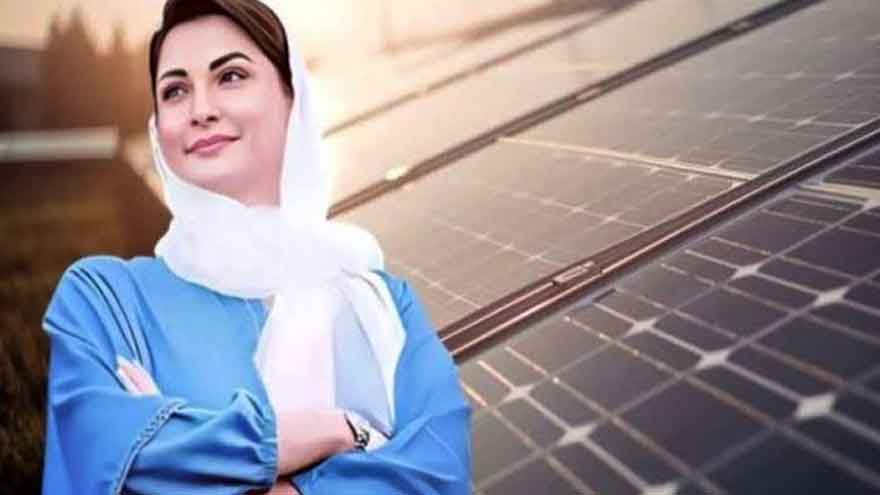
Summary Punjab CM Maryam Nawaz approves Phase II of solar scheme, raises target to 100,000 panels and backs waste-to-energy projects to expand renewable energy across the province.
LAHORE (Dunya News) – Punjab Chief Minister Maryam Nawaz Sharif has approved Phase II of the CM Solar Panel Scheme, increasing the target from 90,000 to 100,000 solar panels to expand access to renewable energy across the province.
The chief minister also approved a pilot project to install 5,000 solar panels in Cholistan and directed officials to prepare a plan for generating energy and biofuel from solid waste in collaboration with the Suthra Punjab initiative.
Chairing a special meeting, Maryam Nawaz ordered energy audits of all major hospitals and directed authorities to install electrical panels according to their energy requirements.
The meeting also granted in-principle approval for a pilot project to generate energy from 3,000 tonnes of waste. Provincial Minister Faisal Khokhar and the energy secretary gave detailed briefings on various proposed initiatives.
The meeting reviewed bioenergy and biofuel projects involving animal waste, agricultural waste and solid waste. A report was also presented on a biorefinery project in Nankana, which would utilise rice husks and other crop residues.
Officials also reviewed plans for commercial-scale biogas plants, private dairy farms and community-based biogas projects across Punjab.
In addition, the meeting granted in-principle approval to shift 40 water supply sites in Cholistan to solar energy.
During the briefing, officials revealed that Phase I of the CM Solar Panel Scheme had received more than 350,000 applications. A total of 89,869 people received solar panels under the first phase, resulting in savings of one-third on their electricity bills.
The scheme has gained considerable popularity across Punjab, according to the briefing.
Officials further informed the meeting that 76 schools across the province had been shifted to solar energy as part of a pilot project.
Punjab has the potential to produce 7.15 billion cubic metres of biogas annually from approximately 490,000 tonnes of animal waste. The briefing also stated that around 1.6 billion units of electricity could be generated from animal, agricultural and solid waste.
According to a public survey conducted by the Energy Department, respondents expressed positive views about Maryam Nawaz’s decisions for low-income communities, with some saying their electricity bills had nearly halved following the launch of the CM Solar Panel Scheme.