Summary Pakistan has urged inclusive global rules for emerging technologies, warning of rising arms competition and security risks while stressing human control, equitable access and international cooperation
NEW YORK (Dunya News) – Pakistan has called for inclusive, equitable and representative global frameworks to govern emerging technologies, warning that their rapid advancement and convergence are reshaping geopolitical dynamics, intensifying arms competition and creating new risks for international peace and security.
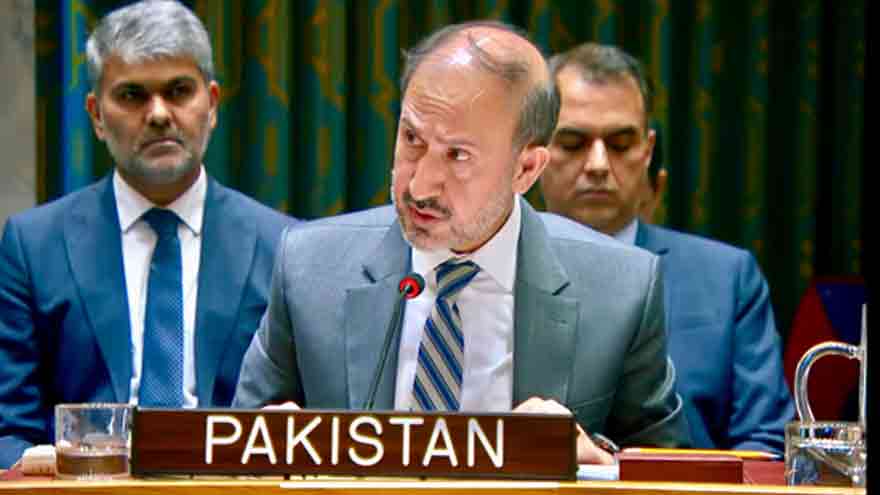
Speaking at the UN Security Council's High-Level Open Debate on Conflict Resolution in an Era of Rapid Technological Change, Ambassador Syed Haider Shah, Pakistan's Permanent Representative to the UN, stated that while technology has historically influenced the conduct of war and the pursuit of peace, the unprecedented speed, scale and complexity of contemporary technological developments have introduced profound new challenges.
Ambassador Shah stressed that technology itself was neutral, but its impact depended on the intentions and motivations of those using it. He emphasized that human judgment and control must remain central at all stages of technological design, development and integration.
Highlighting the need to prevent emerging technologies from accelerating the global arms race, he called for appropriate guardrails, regulations and governance frameworks, alongside confidence-building and restraint measures to reduce the risks of miscalculation and unintended escalation.
The Pakistan Permanent Representtive particularly emphasized that decisions concerning the use of nuclear weapons must remain under human control and that AI systems must never be used to target nuclear command, control and communications systems.
The Ambassador cautioned against technological monopolies, discriminatory restrictions and the instrumentalization of technology for geopolitical dominance. He reaffirmed the inalienable right of all Member States, particularly developing countries, to the peaceful uses of technology and called for equitable access to technological opportunities and infrastructure.
On this occasion, he also highlighted the growing threats posed by misinformation, disinformation, cyberattacks and attacks on critical infrastructure, emphasizing that the UN Charter and international law apply irrespective of the technologies involved.
Stressing the importance of confidence-building measures, he advocated crisis communication, deconfliction and mutual restraint, alongside layered governance frameworks, accountability mechanisms and legally binding instruments, as appropriate.
Ambassador Shah stressed that normative development on emerging technologies, particularly in the area of arms control, should take place in inclusive and representative multilateral forums under UN auspices.
He supported the Security Council's engagement with emerging technologies in the operational context, particularly to strengthen mandate implementation in peacekeeping, peacebuilding and conflict resolution. He highlighted opportunities to leverage technologies, including artificial intelligence and unmanned aerial vehicles, to enhance the protection of civilians and the safety and security of peacekeepers, while addressing their potential misuse by terrorist groups and other non-state actors.
Pakistan reaffirmed that technological progress must advance shared human interests, promote peace and stability, and remain anchored in multilateralism, international law and the principles of sovereign equality.