


UN chief Guterres urges maximum restraint in Yemen after separatist advance
World
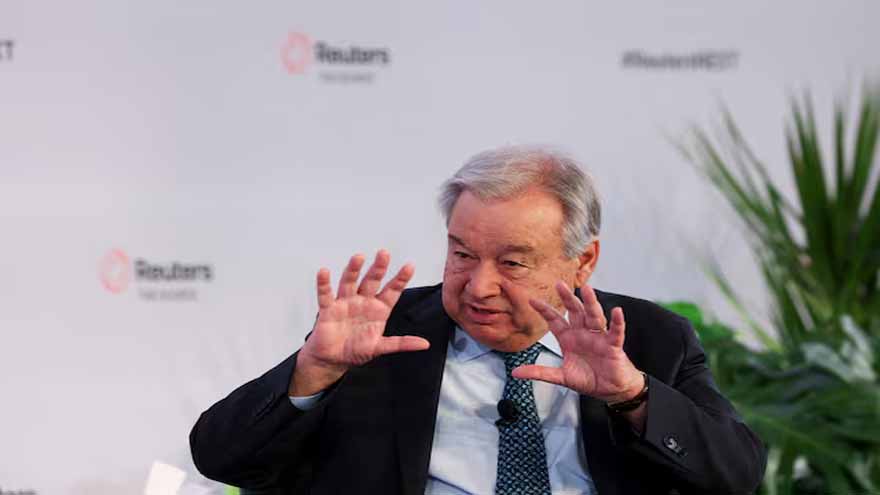
Antonio Guterres has just returned from a visit to Saudi Arabia and Oman

UNITED NATIONS (Reuters) - United Nations Secretary-General Antonio Guterres on Wednesday urged all parties in Yemen to exercise maximum restraint after an advance by southern separatists that risks rekindling a 10-year-old civil war after a long lull.
He also said the operating environment had become untenable in the areas held by the Iran-aligned Houthi movement - Yemen's capital Sanaa and the heavily populated northwest.
The separatist Southern Transitional Council, backed in the past by the United Arab Emirates, says it has taken over the eastern provinces of Hadhramaut and Mahra and is now firmly established across all provinces of the former state of South Yemen.
The STC has been an important part of a coalition fighting alongside the internationally recognised government against the Houthi movement.
"I urge all parties to exercise maximum restraint, de-escalate tensions, and resolve differences through dialogue," Guterres said. "This includes regional stakeholders, whose constructive engagement and coordination in support of UN mediation efforts are essential for ensuring collective security interests."
Guterres, who has just returned from a visit to Saudi Arabia and Oman, also condemned the Houthis' continued arbitrary detention of 59 UN staff, calling for their immediate and unconditional release.
"In recent days, Houthi de facto authorities referred three of our colleagues to a special criminal court. This referral must be rescinded. They have been charged in relation to their performance of United Nations official duties. These charges must be dropped," he said.
The United Nations has repeatedly rejected Houthi accusations that UN staff or UN operations in Yemen were involved in spying.
"We must be allowed to perform our work without interference," Guterres said. "Despite these challenges, we remain committed to providing life-saving support to millions of people across Yemen."
He said 19.5 million people in Yemen - nearly two-thirds of the population - need humanitarian assistance.
