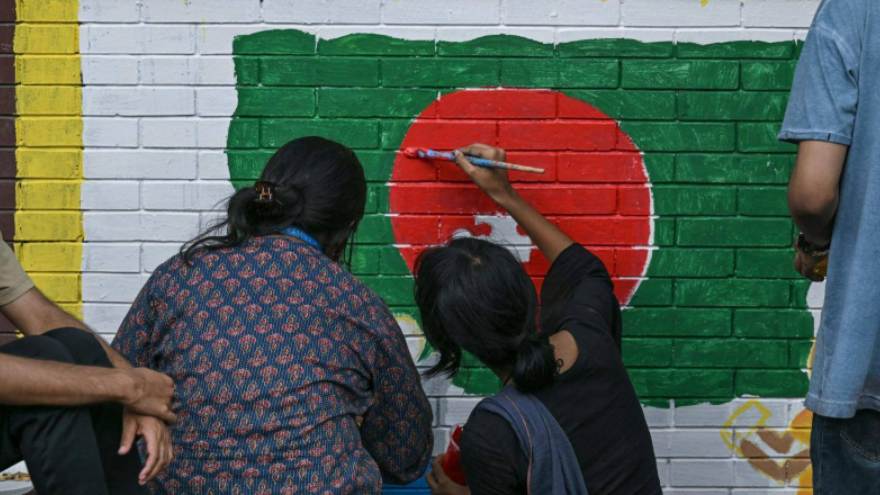
Summary Bangladesh’s February 12 elections sees record youth participation as BNP, Jamaat, and NCP compete after 2024 uprising.
DHAKA (Web Desk) – Bangladesh heads to the polls on (Thursday) February 12, 2026, for one of the most consequential elections in the country’s 55-year history.
The vote follows the dramatic ousting of prime minister Sheikh Hasina in August 2024, after a student-led uprising against her government. The revolt, which resulted in approximately 1,400 deaths, ended Hasina’s long tenure in office, during which she ruled from 1996 to 2001 and then from 2009 to 2024.
Since her removal, Nobel laureate Muhammad Yunus has led an interim administration tasked with preparing the country for a fair and credible election..png)
VOTERS OVERVIEW
Bangladesh has a population exceeding 173 million, making it the eighth most populous country in the world.
.png)
More than 127 million citizens are registered to vote, reflecting a highly engaged electorate in this pivotal election. The country’s urban centres, particularly the capital Dhaka with over 37 million residents, will play a decisive role in shaping results due to their dense populations and diverse demographics.
- New Voters: Among those eligible, nearly five million are casting their ballots for the first time. Approximately 44 percent of voters are aged between 18 and 37, highlighting the significant influence of younger citizens. This generation, many of whom came of age after the 2024 student-led uprising, is expected to play a crucial role in determining the outcome of the February 12 election.
.png)
Bangladesh is predominantly Muslim, accounting for over 90 percent of the population, while Hindus represent around eight percent and other religions make up the remainder. Economically, the country has seen rapid growth over the past 25 years, although GDP expansion slowed to 3.97 percent in the fiscal year ending June 2025. The nation’s GDP stands at $461 billion, with a per capita income of $1,990, underscoring ongoing challenges of poverty reduction and economic diversification.
.jpeg)
GOVERNMENT STRUCTURE
Bangladesh operates as a parliamentary republic. Executive authority rests with the prime minister, who appoints the cabinet, directs policy, and oversees civil service operations. The president is the ceremonial head of state, indirectly elected by parliament for a five-year term. Legislative power lies with the 350-member Jatiya Sangsad, comprising 300 directly elected seats and 50 seats reserved for women, proportionally allocated based on party vote share.
Bangladesh's Tarique Rahman: From exile to edge of power
Administratively, the country is divided into eight divisions, 64 districts, and 495 upazilas, with local governments responsible for municipal services, education, and rural development while remaining heavily dependent on central funding.
POLITICAL PARTIES AND COALITIONS
This election cycle features 51 active parties contesting 1,981 seats, including 249 independent candidates. The Awami League, Sheikh Hasina’s party, remains suspended and cannot field candidates, marking a major departure from previous polls.
- BNP-Led Alliance: The Bangladesh Nationalist Party, led by Tarique Rahman, son of former Prime Minister Khaleda Zia, is contesting 292 of the 300 directly elected seats. Its coalition partners include over half a dozen smaller parties. The BNP’s campaign focuses on financial support for low-income families, a ten-year cap on prime ministerial tenure, foreign investment-driven economic growth, and anti-corruption measures. Opinion polls indicate that this alliance holds a slight edge, reflecting public appetite for change after decades of Awami League dominance.
- Jamaat-e-Islami 11-Party Coalition: Led by Shafiqur Rahman, Jamaat-e-Islami has allied with the National Citizen Party (NCP), a centrist formation created by youth leaders from the 2024 uprising. The coalition contests 224 seats under Jamaat, 30 under the NCP, with the remainder allocated to smaller parties. The alliance emphasises governance rooted in Islamic principles, economic diversification beyond the garment industry, and strengthened relations with neighbouring countries. Analysts predict that while the coalition may not secure an outright majority, it could significantly influence parliamentary dynamics.
Other participants include the Jatiya Party factions (JP-Quader and JP-Ershad), the Left Democratic Alliance, and the Amar Bangladesh Party, which appeals to voters seeking reform-oriented alternatives to entrenched political establishments.
PREVIOUS GOVERNMENTS
Bangladesh’s political evolution has been shaped by coups, assassinations, and alternating periods of military and civilian rule. Sheikh Mujibur Rahman, the nation’s founding president, was assassinated in 1975, triggering years of military dominance. Ziaur Rahman, founder of the BNP, served as president until his assassination in 1981, while Hussain Muhammad Ershad led a military dictatorship from 1982 to 1990.
.png)
Islamist leader rises from obscurity to challenge for Bangladesh's top job
Democracy was restored in 1991, with Khaleda Zia becoming the country’s first female prime minister. Sheikh Hasina and Khaleda Zia would alternate in power over the next two decades. Since 2009, Hasina’s Awami League consolidated dominance, winning 300 seats in 2018 and 272 seats in 2024, in elections criticised for suppressing opposition and lacking fairness.
The 2026 election represents a turning point: for the first time in decades, the two main coalitions will contest without Hasina’s participation, and with millions of first-time and young voters, the results could reshape Bangladesh’s political landscape.