Summary World Bank says Pakistan accounts for 48% of Menaap region’s poor, with poverty rising amid economic shocks, inflation, weaker incomes and reduced employment opportunities.
ISLAMABAD (Dunya News) - Pakistan is home to nearly half of the people living below the extreme poverty line in the Middle East, North Africa, Afghanistan and Pakistan (Menaap) region, according to a latest World Bank report.
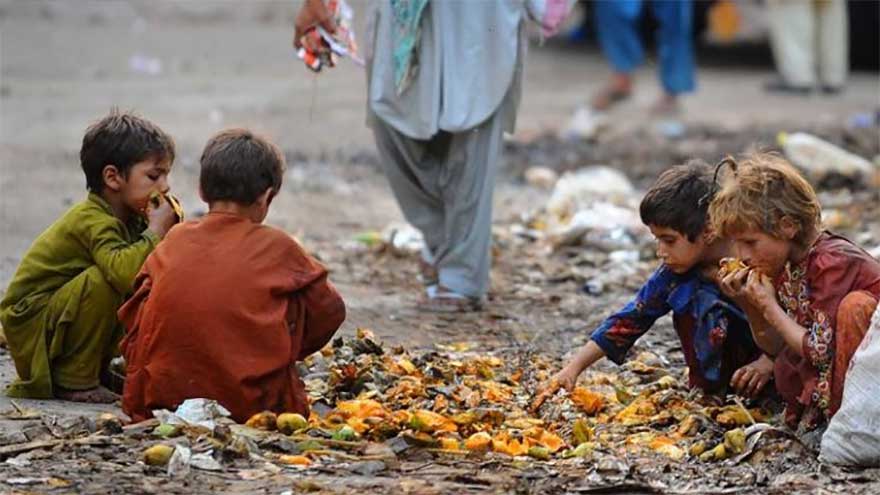
The report said around 48% of people in the region living on less than $3 a day are in Pakistan, highlighting the country’s worsening poverty situation amid prolonged economic difficulties.
The World Bank noted that the $3-a-day threshold is equivalent to roughly Rs840 to Rs850 per person per day, depending on the exchange rate.
According to the report, Pakistan’s poverty rate at the $3-a-day threshold increased by 6.4 percentage points between 2018-19 and 2024-25. At the $4.20-a-day threshold, the poverty rate rose by 3.2 percentage points during the same period.
The World Bank attributed the deterioration to a series of economic and environmental shocks, including the Covid-19 pandemic, the devastating floods of 2022, high inflation, currency depreciation and a prolonged period of economic adjustment.
The report said declining real household incomes and weaker employment opportunities had contributed to the increase in poverty.
It noted that the rise in poverty across the wider Menaap region was driven largely by developments in Pakistan.
The World Bank also highlighted the impact of heightened geopolitical tensions on economies in the region. Pakistan, as a major oil-importing country, remains vulnerable to increases in fuel and commodity prices.
According to the report, petrol prices in Pakistan increased by around 40% following the escalation of conflict in the Middle East, while diesel prices also recorded a rise of more than 40%.
Higher energy and commodity prices are expected to add to inflationary pressures while reducing the fiscal space available to governments, the report said.
Pakistan and other oil-importing economies, including Egypt, Jordan, Morocco, Tunisia and Djibouti, are also exposed to higher borrowing costs and other external economic pressures.
The World Bank further warned that weaker remittance flows from Gulf economies could add to the challenges faced by countries such as Pakistan.
The report said increased geopolitical risks had also raised insurance costs, adding to the financial burden on businesses and governments.
It further observed that Pakistan’s private sector had yet to fully adapt to the country’s changing economic requirements, highlighting the need for greater economic transformation and stronger employment opportunities.