Summary Nawaz Sharif credits leadership for improving Pakistan’s image, highlights development projects, and criticizes governance in Khyber Pakhtunkhwa province.
GILGIT-BALTISTAN (Dunya News) - Former prime minister and president of the Pakistan Muslim League (N), Nawaz Sharif, said that Prime Minister Shehbaz Sharif, Deputy Prime Minister Ishaq Dar, and Army Chief Syed Asim Munir have played a historic role in enhancing Pakistan’s global reputation.
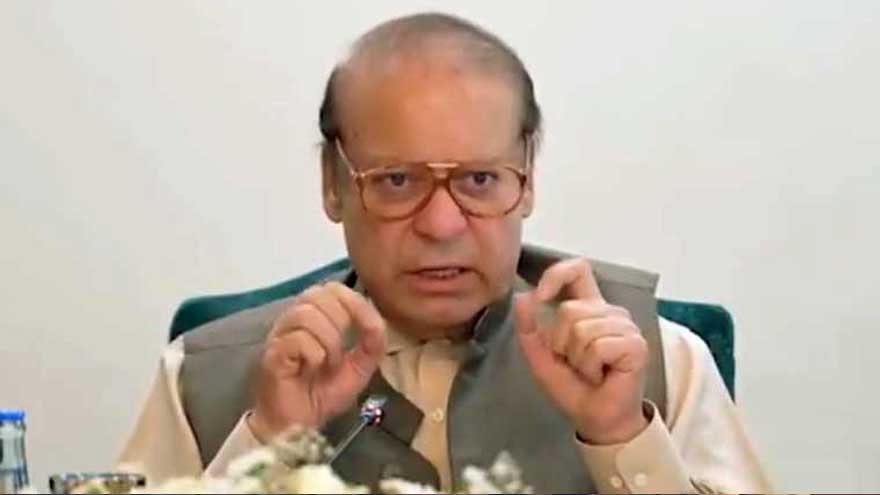
Addressing a high-level meeting of the Gilgit-Baltistan parliamentary board, Nawaz Sharif said his party has consistently fulfilled its responsibilities in both political and defense domains. He credited the leadership’s efforts for improving the international perception of the Pakistani passport.
He said the Pakistan Muslim League (N) has delivered development projects in Gilgit-Baltistan, including a road project worth Rs60 billion that significantly reduced travel time and distances. He added that the prime minister is giving special attention to the region’s development.
The former premier emphasized that such projects are not favors but the rightful entitlement of the people. “We have not relied on rhetoric; we have demonstrated performance through practical work,” he said, calling for collective efforts to drive national progress.
He added that Punjab and the federal government are leading in development, noting that Gilgit-Baltistan is as important to him as Punjab, Sindh, and Balochistan. He reiterated that his party believes in tangible action across all sectors.
Nawaz Sharif assured that any funding gaps for Gilgit-Baltistan would be addressed, stating he would personally ensure allocation of resources in coordination with the prime minister.
Referring to infrastructure, he said projects such as the Lowari Tunnel were essential, noting that travel time in some areas has been reduced from 24 hours to 10 hours.
He added that major development initiatives are underway in Islamabad and Punjab, suggesting other provinces should adopt similar models. He also encouraged local governments to generate their own revenue alongside federal support.
Criticizing governance in Khyber Pakhtunkhwa, he questioned the availability of free medicines and quality public transport, asking whether citizens are experiencing relief after years under the same administration.