Summary No meeting between the military leadership and former Prime Minister Imran Khan, say security sources
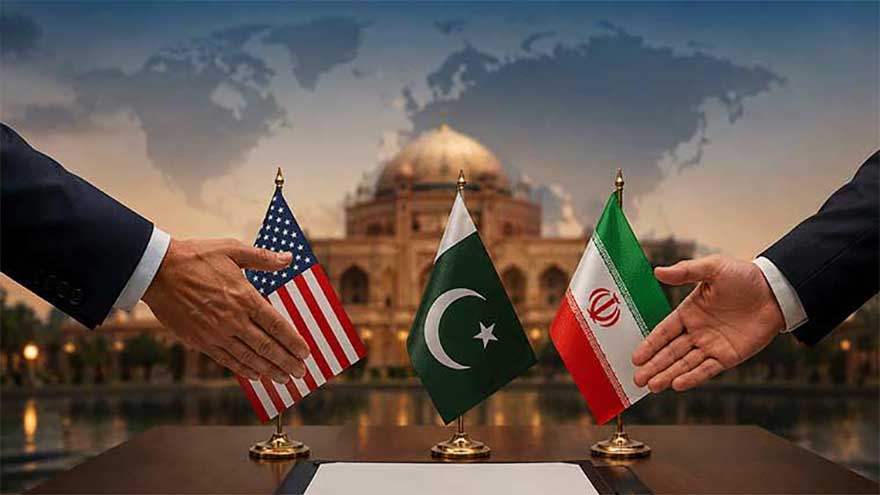
ISLAMABAD (Dunya News) – Security sources have stated that Pakistan is engaged in handling a highly complex situation involving the United States and Iran, underscoring that the matter demands careful diplomacy rather than public posturing.
Officials stressed that Pakistan is not interested in what they described as “headline diplomacy”, and instead remains focused on stability and de-escalation. According to senior security officials speaking to journalists, Pakistan’s role in the evolving US-Iran peace agreement-related dynamics has been that of a facilitator, with Chief of Army Staff and Chief of Defence Forces Field Marshal Asim Munir’s sole interest being peace and regional stability. They added that had the conflict not been contained, the consequences would have been severe for the wider region.
Mediator role
Security sources emphasised that Pakistan has fulfilled all requirements expected of a mediator, and that global actors are gradually recognising its contribution. They noted that “great wars are those won without fighting”, suggesting that diplomatic restraint has helped prevent escalation. Officials also pointed out that several actors continue to influence international media narratives, while countries including Qatar, Saudi Arabia, Türkiye, Egypt and the UAE were acknowledged for supporting de-escalation efforts aligned with Pakistan’s peace stance.
Pakistan’s leadership, including Prime Minister Shehbaz Sharif and the Field Marshal, undertook diplomatic engagements that helped maintain trust among concerned parties. The sources added that Pakistan maintains distinct and constructive relations with Iran, Saudi Arabia, the United States and Afghanistan, and continues to seek improved ties with Afghanistan. It was also stated that external diplomatic visits by Iranian Foreign Minister Abbas Araghchi, including to India, do not affect Pakistan’s position, as Islamabad does not view such engagements through a narrow lens.
Regional stability
Security officials highlighted that Pakistan adopted a balanced and responsible approach throughout recent regional developments, ensuring sustained confidence from relevant stakeholders. They added that Muslim countries also demonstrated restraint, while Pakistan’s diplomatic efforts were described as supported by divine assistance.
The sources warned that any expansion of conflict would have had serious consequences for energy markets, economic stability and security structures, affecting both wealthy and developing nations alike. They further stated that Pakistan’s media also acted responsibly during the situation. The ISPR issued only two press releases, while official statements and social media communications from the Prime Minister were released uniformly to global audiences without targeting any specific party.
Officials said that diplomatic outreach, including the Field Marshal’s visit to Iran and other engagements, contributed significantly to reducing tensions and building confidence, positioning Pakistan as a reliable regional actor.
Counterterror ops
Security sources disclosed that by 15 June 2026, Pakistan had conducted 32,092 intelligence-based operations. During this period, 2,170 terrorist incidents were recorded, with 64 percent occurring in Khyber Pakhtunkhwa and 34 percent in Balochistan. A total of 1,861 terrorists were killed, while 640 personnel from the armed forces, law enforcement agencies and civilians were martyred. Additionally, 862 terrorists were killed during operations in Afghanistan, while 999 were neutralised within Pakistan.
Officials reiterated that Pakistan’s first Nishan-e-Haider originated from Kashmir, stressing that the country’s concern is with militant networks rather than civilian populations. They also alleged external involvement in destabilising activities in Indian-administered Kashmir, noting restrictions on movement and expression there, and questioning claims about public sentiment being influenced.
Kashmir dynamics
Security sources stated that movements in Azad Kashmir began as rights-based political activity, while emphasising that Pakistan’s default approach remains dialogue. They said the situation took time to fully understand, but authorities were aware of the agendas of groups such as JAAC and Baloch Yakjehti Committee (BYC), noting that reactions to their classification as militant-linked entities had previously generated controversy.
It was further stated that the Azad Kashmir government had urged shopkeepers to resume business activities, while JAAC allegedly warned against reopening. Authorities maintained that political processes were being followed, while asserting that anti-state slogans were being raised from within the region. The state, officials said, continues to respond through engagement and dialogue, adding that legal and constitutional mechanisms will be used to address emerging challenges.
Internal security
Security sources noted that Pakistan continues to face internal security challenges, including terrorism, which has now evolved into a technology-driven form of warfare. They acknowledged budgetary constraints in this regard, while stating that both military and political leadership are aware of the issue.
Officials also stated that approximately 40 percent of Pakistan Army personnel belong to Kashmir, reflecting regional representation within the armed forces. They confirmed that there had been no meeting between the military leadership and former Prime Minister Imran Khan, and reiterated that those involved in the events of 9 May would be brought to justice.