Summary The Lahore High Court rules that a private DNA test cannot overturn a child's legal paternity, emphasising privacy, consent and parental maintenance obligations.
LAHORE (Muhammad Ashfaq) – The Lahore High Court has ruled that a child born during a valid and subsisting marriage cannot be deprived of legal paternity solely on the basis of a privately conducted DNA test.
The court emphasised that a child’s dignity, privacy and mental and emotional well-being must remain paramount, declaring that secretly obtaining a child’s DNA sample without court authorisation and the mother’s consent violates fundamental rights.
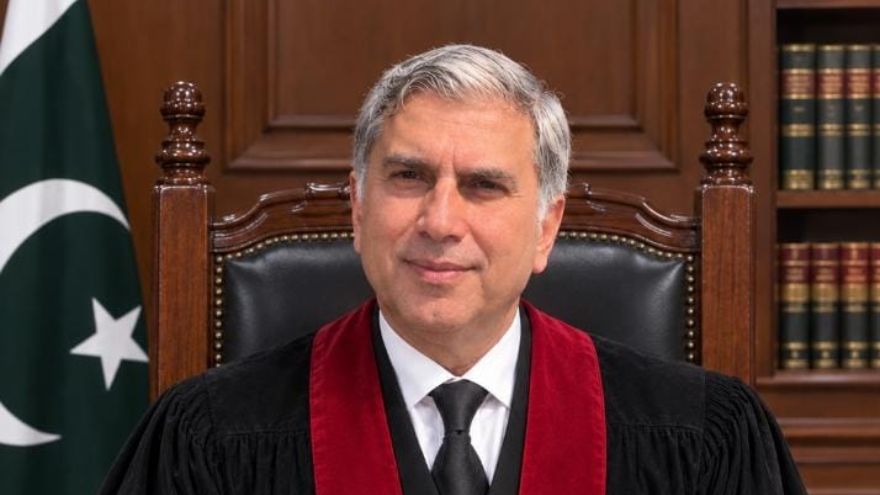
Justice Asad Ali Bajwa dismissed a constitutional petition filed by Usama Tahir and others, challenging earlier decisions by a family court in Gujranwala and an additional district judge. The high court issued an eight-page written judgment, upholding the lower courts’ findings on the child’s paternity, monthly maintenance and the wife’s dowry claim.
According to the judgment, Usama Tahir had denied being the child’s father and obtained a DNA test from a private laboratory in the United Kingdom. The report allegedly excluded him as the biological father.
However, the high court observed that the test had been arranged privately, without supervision by a competent judicial forum or the consent of the child’s mother. Consequently, the unilateral report could not override the legal presumption of paternity established under the law.
The court referred to Article 128 of the Qanun-e-Shahadat Order, 1984, which establishes an irrebuttable presumption of legitimacy when a child is born during a valid and subsisting marriage, except in circumstances specifically recognised by law.
The judgment noted that the couple married on August 18, 2019, while their child was born on April 27, 2022. Evidence established that the marriage was intact at the time of the birth. The father had also accompanied his wife to the hospital when she delivered the child.
Justice Bajwa observed that the availability of modern scientific techniques did not mean DNA testing could be ordered or conducted in every dispute. Courts must assess whether such testing is necessary to meet the ends of justice and serves the best interests of the child.
The judgment further stated that collecting a child's biological samples without the mother's consent interferes with the child's privacy, liberty and bodily autonomy.
Referring to Articles 4, 9 and 14 of the Constitution, the court highlighted the protection afforded to individual liberty, dignity, privacy and lawful treatment. Obtaining someone's genetic information without consent amounts to an interference with fundamental rights and requires a proper legal justification.
The high court also cited a Supreme Court ruling concerning the time limit under Muslim personal law for challenging a child's paternity. According to the judgment, a father must take action within 40 days of the child's birth.
In this case, the child was born on April 27, 2022, while the disputed DNA test was conducted on September 5, 2022. The court therefore held that the report could not be recognised as legally valid grounds for challenging the child's established paternity.
On the issue of child maintenance, the high court observed that financial support must be determined by considering the child's needs and the father's financial capacity.
The judgment explained that maintenance extends beyond food, clothing and accommodation. It also covers education, medical treatment and expenses necessary for the child's physical, mental and emotional development.
The court stressed that a father's responsibility does not disappear merely because he fails to provide sufficient documentary evidence of his income. His earning capacity and overall financial circumstances must also be considered when determining maintenance.
According to the court record, the family court had initially fixed monthly maintenance at Rs10,000 for the minor child. The appellate court subsequently increased the amount to Rs25,000, while retaining an annual increase of 10 per cent.
The high court found that the father had failed to establish that the revised amount exceeded his financial capacity and saw no reason to interfere with the appellate court's decision.
Regarding the wife's dowry claim, the court observed that such disputes must be decided on the basis of evidence presented by both parties.
The family court had not accepted the entire claim but excluded certain items after examining the evidence. It awarded the remaining articles or their alternative monetary value at Rs970,000.
The high court found no legal justification to disturb that determination.
The judgment also clarified the limits of constitutional jurisdiction under Article 199, stating that the high court cannot interfere with concurrent findings of subordinate courts merely because another interpretation of the evidence is possible.
Intervention is justified only where there is a jurisdictional error, a clear legal irregularity or a material misreading of evidence.
Finding no such defect in the decisions of the lower courts, the Lahore High Court dismissed the constitutional petition filed by Usama Tahir and others, leaving the rulings on paternity, maintenance and the dowry claim intact.