Summary Day 21 of war sees Eid under fire in Iran and Lebanon; missile strikes intensify, civilians killed, Iran retaliates, and regional tensions escalate sharply.
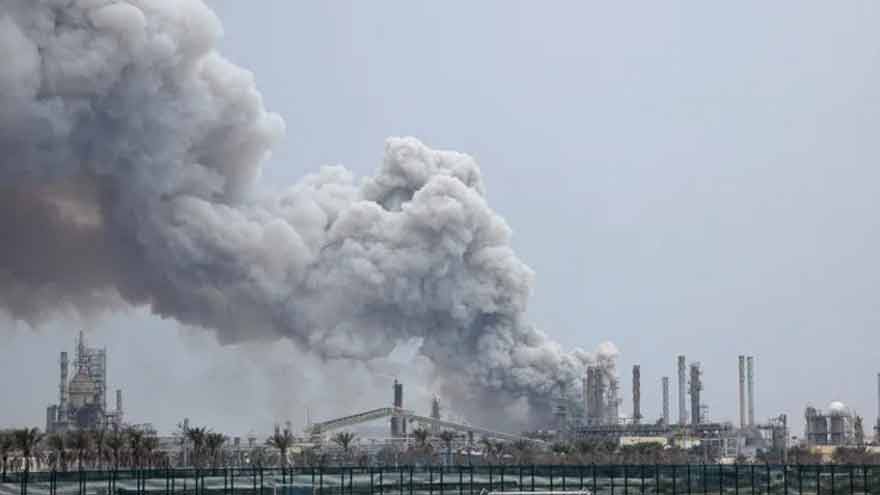
TEHRAN, WASHINGTON (Dunya News) - The 21st day of the Middle East war is being marked with Eid celebrations under the shadow of Israeli aggression in Lebanon, while overnight US and Israeli attacks continued on Iran. In response, Iran targeted a major Israeli oil refinery, causing a power outage, while an American F-35 fighter jet was also targeted. Continued US-Israeli aggression has resulted in more civilian deaths and injuries.
Rising Casualties in Iran and Lebanon
In Iran, the 30th fast is being observed today, with Eid-ul-Fitr to be celebrated tomorrow.
Despite the festive occasion, US and Israeli attacks on civilian areas continue, which are being viewed as violations of international law.
Since the war began on February 28, at least 3,186 people have been killed in Iran, including 210 children and 1,394 civilians. Among the deceased are 1,153 military personnel, while 639 deaths remain unidentified.
In Lebanon, the death toll has reached nearly one thousand, with thousands injured and millions displaced.
Meanwhile, Israeli forces prevented Palestinians from offering Eid prayers at Al-Aqsa Mosque, forcing worshippers to perform prayers outside.
Iran Warns Countries Against Supporting US
Iran’s Foreign Minister, Abbas Araghchi, warned during a phone call with his British counterpart that providing military bases to the United States would be considered direct participation in aggression.
Iran cautioned that such countries would be treated as part of the conflict and reiterated that enemy military bases could become targets.
Missile Program Remains Intact
Iranian authorities stated that the missile production program remains unaffected, with no reduction in stockpiles despite ongoing attacks.
Officials maintained that the defense industry is fully operational and production continues, rejecting US and Israeli claims of severe damage to Iran’s missile capabilities.
UN Calls for Immediate End to War
UN Secretary-General Antonio Guterres called on the United States and Israel to end the war, urging Iran to halt attacks on neighboring countries and reopen the Strait of Hormuz.
Missile and Drone Threats Across Gulf States
The UAE, Saudi Arabia, Kuwait, and Bahrain reported missile and drone threats, activating air defense systems and warning citizens. Saudi Arabia claimed to have intercepted five drones, while Bahrain issued alerts urging residents to move to safe locations.
EU Backs Diplomatic Efforts
The European Union announced support for diplomatic efforts to end the war, stating that migration toward Europe has not yet increased but preparations remain in place.
The EU emphasized using diplomatic, legal, and financial tools to ensure regional security.
US Military Movements Intensify
Flight tracking reports revealed that a US B-1 bomber returned to the United Kingdom after strikes, as France, Portugal, and Spain denied airspace access, forcing the aircraft to travel over the Mediterranean and Atlantic.
Europe has also restricted airspace for US warplanes.
Reports indicate that the United States is preparing to deploy additional forces, including 4,000 Marines and sailors, while naval fleets with ground attack capability are moving toward the region.
Heavy Losses in Air Warfare
According to Bloomberg, 16 US aircraft have been destroyed in the conflict, including 10 Reaper drones, while six additional fighter jets suffered heavy damage.
Reports also mentioned friendly fire incidents over Kuwait, the destruction of a KC-135 tanker during refueling that killed all six crew members, and damage to five more tankers in Saudi Arabia due to Iranian missile strikes. Iran has also destroyed nine US drones, including one targeted in Jordan using a ballistic missile.
Lebanon Attacks and Hezbollah Response
In Lebanon, Israeli airstrikes killed four people in Sidon and Tyre, injuring several others. Hezbollah claimed rocket attacks on Israeli military bases and the destruction of a bulldozer, along with targeting Israeli troops in southern Lebanon.
Haifa Refinery Hit, Power Disrupted
Iran’s retaliatory strikes also hit Israel’s Haifa oil refinery, disrupting electricity supply. Iranian Foreign Minister Abbas Araghchi warned that any further attacks on Iran’s infrastructure would be met with a strong response, stressing that compensation for civilian damage would be a necessary condition for ending the war.
F-35 Incident and Conflicting Claims
Iran’s Revolutionary Guard claimed it targeted a US F-35 jet at 2:50 a.m., suggesting it was likely destroyed and highlighting improvements in air defense systems.
A video of the incident was released, while US Central Command spokesman Captain Tim Hawkins stated that the aircraft made a safe emergency landing and investigations are ongoing.
Leaders Exchange Strong Statements
Iranian President Masoud Pezeshkian said the Israeli government is based on state terrorism, warning that US aggression has set a dangerous precedent that could undermine international law, adding that global silence may prove dangerous.
Israeli Prime Minister Benjamin Netanyahu acknowledged that Israel carried out the South Pars attack but said further strikes were halted following intervention by Donald Trump. He claimed Iran’s missile and uranium enrichment capabilities had been neutralized and suggested the war could end sooner than expected.