Iran Supreme Leader blames Israel for 'false flag' strikes on Oman, Turkiye; offers mediation between Pakistan and Afghanistan

Iran Supreme Leader blames Israel for 'false flag' strikes on Oman, Turkiye; offers mediation between Pakistan and Afghanistan

World

Iran’s Supreme Leader denies Tehran’s role in Oman and Turkiye attacks, while offering mediation between Pakistan and Afghanistan.

Follow on
Follow us on Google News
 

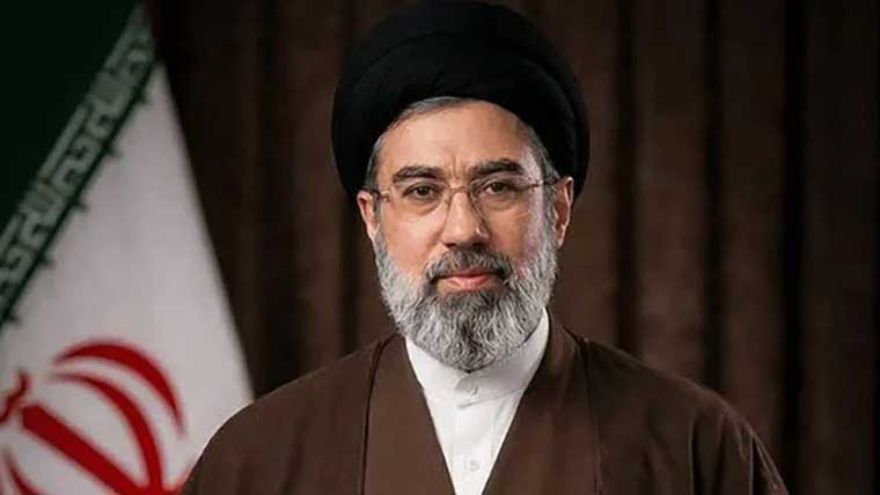
TEHRAN (Dunya News) – Iran’s Supreme Leader Mojtaba Khamenei has denied Tehran’s involvement in recent attacks in Oman and Turkiye, describing them as a “false flag tactic” orchestrated by Israel.

In a statement issued on his Telegram channel and official Iranian media during Nowruz, the Persian New Year, Khamenei said these attacks targeted countries with which Iran enjoys strong relations and were aimed at creating regional discord.

“I should also remark that the attacks against Turkiye and Oman – both of which have good relations with us – targeting certain locations in these countries, were in no way carried out by the armed forces of the Islamic Republic or other forces of the Resistance Front,” Khamenei said. “This is a ploy by the Zionist enemy, employing the false flag tactic to sow discord between the Islamic Republic and its neighbours, and it may also occur in other countries.”

This statement comes amid escalating hostilities following the assassination of former Supreme Leader Ali Khamenei on 28 February, which triggered attacks by the United States and Israel, rapidly escalating into a broader regional conflict. The war has sent shockwaves across the Middle East, affecting Gulf countries, straining international energy markets, and triggering global economic uncertainty.

Khamenei, addressing the Iranian people, praised their steadfast unity during the ongoing conflict, emphasising that continued resilience in fasting and struggle had already weakened the enemy. He stated that national solidarity had inflicted a “dizzying blow” on adversaries, particularly United States and Israel, and affirmed that cohesion among the population would continue to thwart foreign hostile agendas.

The Supreme Leader also underscored the strategic importance of Pakistan, asserting that opponents were attempting to damage Iran’s relations with neighbouring nations. He proposed improved ties between Pakistan and Afghanistan and reiterated Tehran’s readiness to mediate between the two countries to enhance regional stability and cooperation.

Pakistan announces temporary pause in Operation Ghazab-lil-Haq ahead of Eidul Fitr

Extending greetings for Nowruz and Eidul Fitr, Khamenei also expressed condolences to the families of the “martyrs” of the ongoing war, which he described as imposed on Iran. He highlighted that public unity across religious, intellectual, cultural, and political differences had already helped defeat external adversaries.

In parallel, the Supreme Leader addressed recent attacks on sacred sites, including Jerusalem’s Al-Aqsa Mosque, the Western Wall, and the Church of the Holy Sepulchre. Israeli authorities reported damage caused by Iranian missile fragments and described the strikes as an “Iranian gift” coinciding with Eid al-Fitr. Israel confirmed operations against Iranian commanders, including the chief of the Basij paramilitary, Ismaeil Ahmadi, who was reportedly killed in targeted strikes, alongside Iran’s top military leadership in northern regions near the Caspian Sea.

The conflict has also inflicted severe disruption on regional energy infrastructure. Missile and drone strikes on Qatar’s Ras Laffan natural gas facility are expected to cost $20 billion annually and may take up to five years to fully repair. Attacks on Kuwait’s Mina Al-Ahmadi refinery sparked fires and temporary shutdowns, aggravating global energy supply concerns. Iran has effectively restricted access through the Strait of Hormuz, a key route for oil and LNG exports, further amplifying price volatility.

US President Donald Trump criticised NATO allies for “cowardice” in failing to intervene militarily, while six major powers, including Britain, France, Germany, and Japan, offered limited assistance to secure the strait. Analysts warn the ongoing conflict may trigger a lasting global economic shock, with energy price surges, rising inflation, and lower economic growth.

The human cost of the war continues to mount. Israeli airstrikes in Lebanon have claimed over 1,000 lives, primarily in southern regions and Beirut’s southern suburbs. Millions have been displaced across Iran, Lebanon, and neighbouring territories, with NATO scaling back its mission in Iraq due to repeated attacks on US bases in Baghdad’s Green Zone.

Despite the violence and uncertainty, Khamenei reaffirmed that Iranian unity remained a decisive factor in countering external threats. He asserted that collective strength would continue to neutralise adversary ambitions, signalling Tehran’s determination to maintain influence across the region while strengthening strategic relations with Pakistan, Oman, and Turkiye.