Summary While Beijing has repeatedly criticised the US-Israeli campaign as illegal, Xi has made few public comments about the conflict
BEIJING (Reuters) – The international rule of law must be upheld for peace and stability to prevail in the Middle East, China's President Xi Jinping said on Tuesday, in a rebuke of the US-Israeli war on Iran.
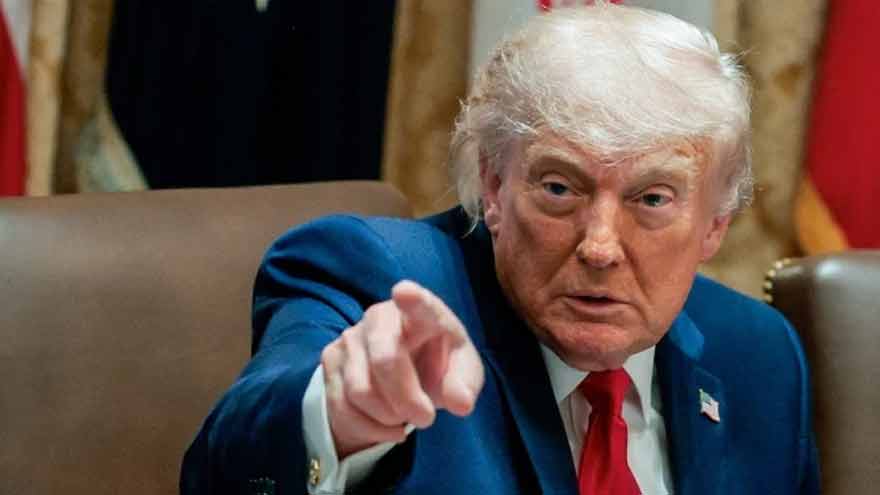
While Beijing has repeatedly criticised the US-Israeli campaign as illegal, Xi has made few public comments about the conflict. He will hold talks with US President Donald Trump in an expected meeting in Beijing next month.
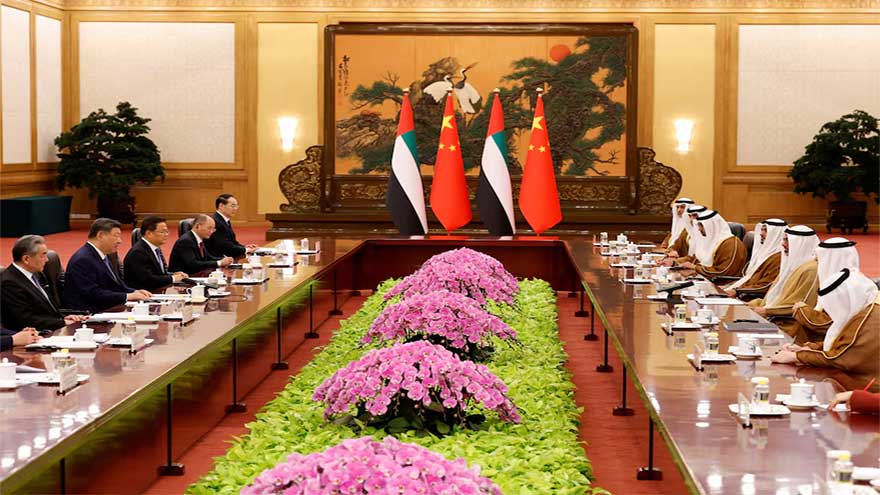
The rule of law cannot be "used when convenient and discarded when not", Xi told Sheikh Khaled bin Mohamed bin Zayed Al Nahyan, the visiting crown prince of Abu Dhabi, according to the official Xinhua news agency.
The visit comes amid heightened tensions in the Middle East after weekend talks between Washington and Tehran failed to reach a deal to end the war.
Since the war erupted in late February, Iran has effectively shut the key Strait of Hormuz shipping route to vessels it deems from unfriendly nations. On Monday, the US military began a blockade of Iran's ports, accusing Iran of "economic terrorism".
Oil shipments from Gulf states including the UAE through the strait have plunged since the war started. Tehran has also launched missile and drone strikes on energy infrastructure in neighbouring Gulf nations, including the UAE.
Official data on Tuesday showed Chinese natural gas imports for March dropped to their lowest since October 2022, while inbound shipments of crude oil fell 2.8%, with Chinese vessels stuck in the Strait of Hormuz.
"We must not allow the world to revert to the law of the jungle," Xi told Sheikh Khaled, the eldest son of UAE President Sheikh Mohamed bin Zayed Al Nahyan.
STRATEGIC PARTNERSHIP
Xi told Sheikh Khaled, who also chairs the Abu Dhabi Executive Council, that China was willing to work with the UAE to build a more robust, resilient, and dynamic strategic partnership.
The visit by the crown prince of the largest of the UAE's seven emirates underscores a long-term commitment to expand a growing economic corridor with China, building on momentum generated by the 2024 visit of Sheikh Khaled's father.
On Monday, the UAE's national airline, Abu Dhabi-based Etihad Airways, announced a plan to significantly expand its network of flights between the UAE capital and Chinese cities in 2026 and 2027.
Highlighting the UAE's push to deepen economic ties with China, Sheikh Khaled's delegation included Sultan Ahmed Al Jaber, CEO of the Abu Dhabi National Oil Company and industry minister; investment minister Mohamed Hassan Alsuwaidi; and trade minister Thani bin Ahmed Al Zeyoudi.
On Monday, China's No.2, Premier Li Qiang, told the crown prince that Beijing was willing to explore cooperation in energy storage, hydrogen and new energy vehicles.
Bilateral trade should be "expanded in scale, but also optimised structurally," Li said, adding that China welcomed more UAE investment in sectors such as artificial intelligence, advanced manufacturing and life sciences.
Later this year, China plans to host the second China-Arab States Summit, where Beijing hopes to complete talks on a free trade pact between China and the Gulf Cooperation Council, which includes the UAE, Qatar, Bahrain, Oman, Kuwait and Saudi Arabia.