Summary Iran reinstates strict military control over the Strait of Hormuz, citing U.S. violations, despite a temporary reopening after a Lebanon ceasefire; tensions and uncertainty persist.
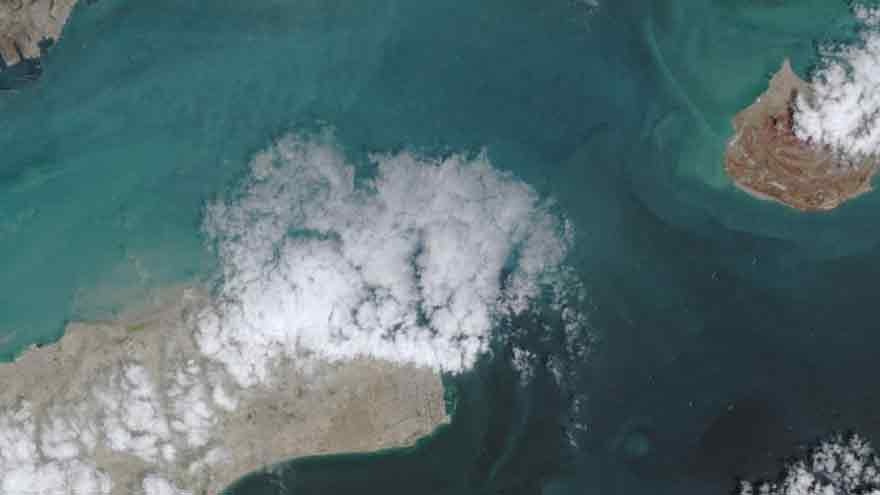
(Web Desk) – The spokesperson for Iran's Khatam al-Anbiya Central Headquarters announced that transit through the Strait of Hormuz has returned to its previous regime of strict military control, citing violations and piracy by the United States under the pretext of a blockade.
The development comes hours after Iran temporarily reopened the Strait of Hormuz on Friday following a ceasefire agreement in Lebanon, raising optimism about peace talks, but Tehran had warned that it could close the crucial waterway again if the recent U.S. Navy blockade of Iranian ports continued.
Foreign Minister Abbas Araqchi had announced on social media that the strait, a slender chokepoint in global energy trade, was open for all commercial vessels for the remainder of the U.S.-brokered 10-day truce that was agreed on Thursday between Israel and Lebanon, which was invaded by Israel after the Iran-allied Hezbollah militant group joined the fighting.
US President Donald Trump, who with Israel launched the war on Iran on February 28 that has killed thousands of people and led to the strait's de facto closure, told supporters at a rally in Arizona that Araqchi's announcement marked "a great and brilliant day for the world."
But subsequent statements and clarifications from both sides left uncertainty over how quickly shipping might return to normal, and some vessels could be observed making unsuccessful attempts cross the strait on Friday before turning back.
Trump said a US blockade of ships sailing to Iranian ports, announced after talks with Iran last weekend ended without agreement, would remain until "our transaction with Iran is 100% complete".
Iran responded sharply, with Iran's parliament speaker and senior negotiator Mohammad Baqer Qalibaf saying in a social media post that the strait, which until recently carried about a fifth of the world's oil trade, "will not remain open" if the US blockade continues. He also said Trump had made multiple false claims about the peace talks on Friday.
Trump says he has 'good news' on Iran
US President Donald Trump said there had been "some pretty good news" about Iran, suggesting optimism about peace talks to end the war in the Middle East, but he said a ceasefire in the conflict may not be extended without a deal by Wednesday.
Iran, hours earlier, had temporarily reopened the Strait of Hormuz following a separate US-brokered ceasefire agreement by Israel and Lebanon. But subsequent statements from both sides left uncertainty over how quickly shipping might return to normal through the global oil choke point.
Trump, speaking on Air Force One late on Friday, declined to elaborate on what the good news was.
"It seems to be going very well in the Middle East with Iran," he told reporters while returning to Washington from Phoenix, Arizona. "We're negotiating over the weekend. I expect things to go well. Many of these things have been negotiated and agreed to.
"The main thing is that Iran will not have a nuclear weapon. You cannot let Iran have a nuclear weapon, and that supersedes everything else."
But in sharp contrast, he said he may end the ceasefire with Iran unless a long-term deal to end the war is agreed before it expires on Wednesday, adding that a US blockade of Iranian ports would continue.