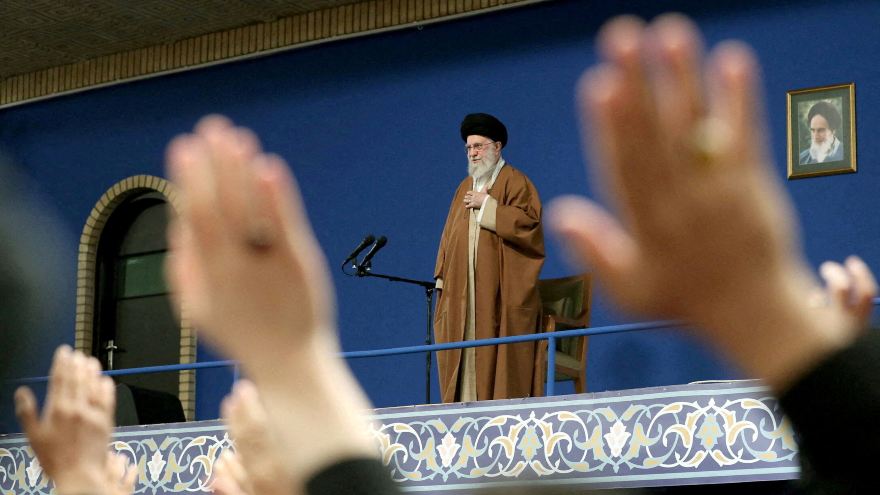
Summary Khamenei, who ruled Iran for more than three decades, was killed in Israeli and US strikes on Iran in February at the age of 86
TEHRAN (Web Desk) – Iran has announced that funeral ceremonies for late Supreme Leader Ayatollah Ali Khamenei will begin in Tehran on July 4, with his burial scheduled to take place in the northeastern city of Mashhad on July 9, state media reported on Saturday.
Khamenei, who ruled Iran for more than three decades, was killed in Israeli and US strikes on Iran in February at the age of 86, according to Iranian state media. His death marked the end of one of the longest and most influential leadership eras in the history of the Islamic Republic, which he shaped through a firm anti-Western stance, expanded regional influence and strict control over domestic affairs.
Khamenei became Iran’s supreme leader in 1989 following the death of Ayatollah Ruhollah Khomeini, the founder of the Islamic Republic. Initially viewed by some analysts as an unlikely successor due to his limited religious stature and lower public profile compared with Khomeini, he gradually consolidated power and became the ultimate authority in Iran’s political system.

As supreme leader, Khamenei controlled the armed forces, appointed senior officials in key institutions and maintained strong influence over security agencies, the judiciary and state media. His leadership was defined by opposition to the United States and Israel, while western critics accused him of suppressing political dissent and restricting civil liberties.

Khamenei oversaw the expansion of Iran’s influence across the Middle East by supporting allied groups and militias in countries including Iraq, Lebanon, Syria and Yemen. Under his leadership, Tehran strengthened ties with groups such as Hezbollah, Hamas and Yemen’s Houthis as part of what Iran called its “Axis of Resistance” against US and Israeli influence.

His tenure also included decades of tensions with Washington over Iran’s nuclear programme. Khamenei supported the 2015 nuclear agreement that limited Iran’s nuclear activities in exchange for sanctions relief, but relations deteriorated after the US withdrew from the deal in 2018 and restored sanctions.
Born in Mashhad in 1939, Khamenei became a cleric at a young age and was involved in political activities against Iran’s monarchy before the 1979 Islamic Revolution. He later held several senior positions in the newly established Islamic Republic, including the presidency, before becoming supreme leader.