Summary Lebanese troops enter town after Israeli troops leave area as part of a US-brokered deal
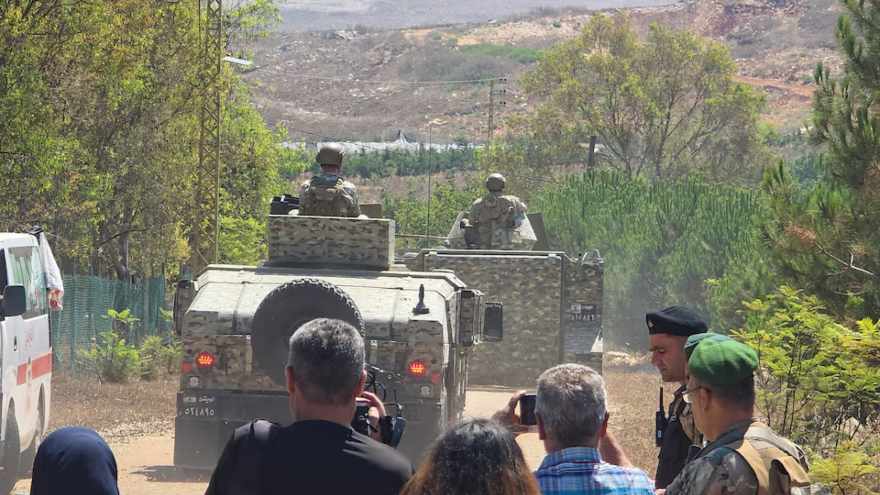
BEIRUT (Reuters) – Lebanese army troops began deploying in the southern Lebanese town of Zawtar al-Gharbiyeh on Tuesday after Israeli forces withdrew from the area, a senior Lebanese security official said, in line with a US-brokered plan.
The plan foresees Lebanese army troops confiscating weapons from the Iran-aligned Hezbollah group in parts of southern Lebanon and phased withdrawals of Israeli troops. The Israeli military said on Monday that the plan, dubbed the pilot zone programme, has begun. It had no immediate comment on Tuesday.
Tuesday's handover of territory is the first test of the plan, which Lebanon hopes will enable it to restore control over a strip of land about 10 km (6.2 miles) deep into the country that remains occupied by Israeli troops.
Dozens of villages have been razed in that area and public infrastructure has been destroyed, including hospitals, power stations and water pumps. Tens of thousands of Lebanese who call the area home have been unable to return.
The latest round of fighting between Hezbollah and Israel began at the start of March, two days after the United States and Israel launched strikes against Iran. Hezbollah said its actions were in support of Tehran.
The Lebanese army said its units began deploying in Zawtar al-Gharbiyeh in the Nabatieh region on Tuesday.
The army renewed a call for residents not to enter the town until the security situation stabilises and to follow instructions from deployed military units for their own safety.
EXTENSIVE DAMAGE
A senior Lebanese military official told Reuters that army units were sweeping the town for unexploded ordnance, but that much work remained before it could be declared safe for residents.
"Army engineering teams have entered Zawtar al-Gharbiyeh, and we are waiting for further instructions," the town's mayor, Abed Ezzeddin, said. "We will inform residents once the area is confirmed to be safe and under the army's control."
Ezzeddin described the destruction as extremely extensive, saying more than half the town had been destroyed and that the remaining homes had suffered severe damage, leaving the village uninhabitable.
He questioned whether residents could return safely while Israeli forces remained in neighbouring Zawtar al-Sharqiyeh, which he said was closely connected to Zawtar al-Gharbiyeh and only a five-minute walk away.
"How can I be sure that I can enter Zawtar al-Gharbiyeh safely?" Ezzeddin said. "How can I think of settling there when the Israelis are right next to me in Zawtar al-Sharqiyeh?"
The Israeli military confirmed on Monday that it was redeploying its forces as part of the pilot programme.
"The pilot serves as a test of the Lebanese Armed Forces’ sovereignty in the three pilot villages, as the sole official authority authorised to bear arms in the area," an Israeli military official said.
Israeli officials have voiced scepticism about Lebanon's ability to disarm Hezbollah but Israel sees the deal reached last month as a vital step towards building peace with Lebanon in the long run.
Lebanese President Joseph Aoun was due later on Tuesday to meet US President Donald Trump in Washington.