Summary NTSB chair urges Congress to pass aviation safety legislation
WASHINGTON (Reuters) – National Transportation Safety Board (NTSB) Chair Jennifer Homendy has urged the US Congress to end a months-long legislative deadlock and approve major aviation safety reforms designed to prevent future midair collisions.
Homendy said the NTSB had already provided lawmakers with "a clear roadmap" to improve aviation safety and reduce the risk of another catastrophic midair collision, adding that it was now time for Congress to act on reforms promised months ago.
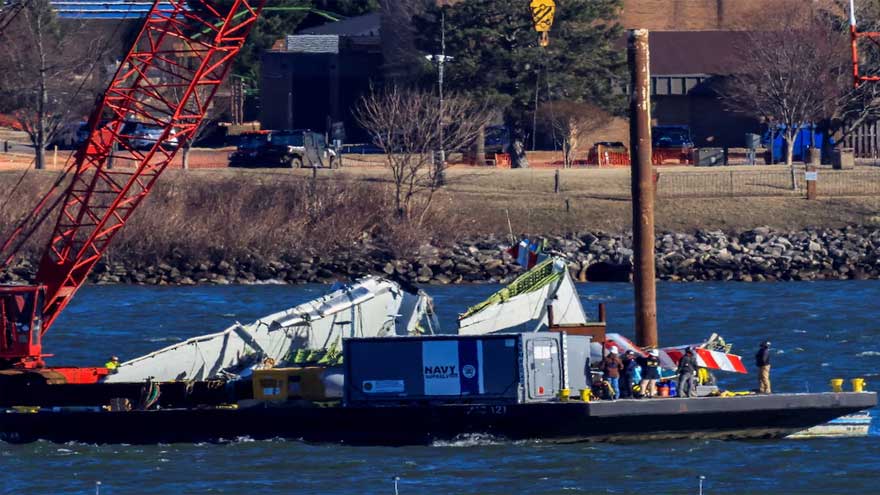
The call follows the January 2025 collision between an American Airlines regional jet and a US Army helicopter near Washington, DC, which killed 67 people in the deadliest US aviation disaster since 2001.
In April, the US House of Representatives overwhelmingly approved a comprehensive aviation safety reform bill by a 396-10 vote. The legislation incorporates dozens of recommendations issued after the crash. Meanwhile, the Senate unanimously passed a separate measure, known as the ROTOR Act, in December, but it fell one vote short of the required two-thirds majority in the House under fast-track procedures.
According to the NTSB, the use of Automatic Dependent Surveillance-Broadcast (ADS-B) technology would have prevented the 2025 collision in the congested airspace around the US capital.
Earlier this year, the NTSB concluded that systemic failures by the Federal Aviation Administration (FAA) contributed to the crash.
The House legislation would require collision-prevention technology to be installed on all US military aircraft by 2031, excluding fighter jets, bombers and drones. It also establishes requirements for collision-mitigation systems on civilian aircraft and helicopters.
Negotiations between House and Senate lawmakers are continuing to reconcile differences between the competing bills.
FAA Administrator Bryan Bedford told Reuters earlier this month that the agency had provided technical assistance to Congress during the legislative process. He said the FAA could move ahead with broader deployment of ADS-B technology without congressional approval but preferred clear legislative direction.
The NTSB found that the 2025 accident resulted from the FAA's decision to permit helicopters to operate close to the airport without adequate separation from commercial aircraft, along with its failure to review safety data and implement previous recommendations to reroute helicopter traffic away from the airport.