Summary Pakistan accused India at the UNSC of sponsoring terrorism, targeting minorities, and violating international law
(Web Desk) - Pakistan strongly criticised India at the United Nations Security Council, accusing New Delhi of sponsoring terrorism, persecuting minorities, occupying Jammu and Kashmir by force, and breaching international law.
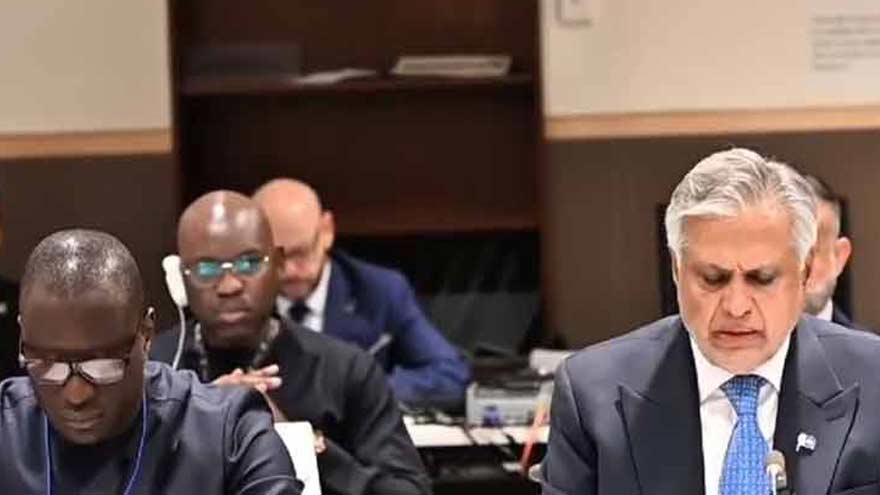
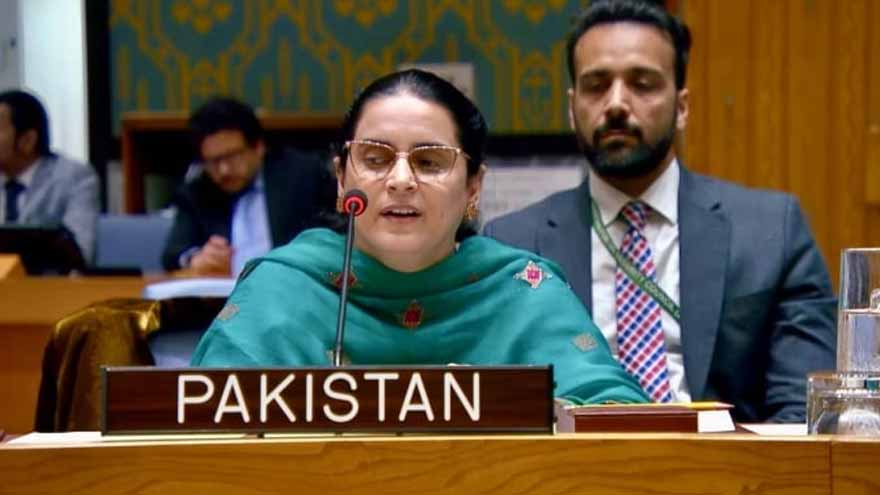
Delivering a right of reply during the UNSC annual debate on the protection of civilians, Saima Saleem, Counsellor on Human Rights for Pakistan’s Permanent Mission to the UN, said India had appeared before the Council “wearing the mask of a victim,” adding that the international community could now see “the face behind that mask.”
During the session, India’s Permanent Representative to the UN, Harish Parvathaneni, accused Pakistan of failing to uphold international humanitarian obligations and targeting civilians. He also repeated allegations linked to the Afghan Taliban regarding an alleged attack on a hospital in Kabul earlier this year.
Responding to the remarks, Saima Saleem stated that India’s alleged sponsorship of terrorism against Pakistan had caused significant human suffering. She claimed that Indian proxies including the Tehreek-e-Taliban Pakistan, Balochistan Liberation Army and the Majeed Brigade had carried out attacks killing thousands of Pakistani civilians, including women and children, through networks allegedly financed and facilitated from Afghan territory.
Speaking on counterterrorism operations, she said Pakistan had conducted “precise, deliberate and professional” strikes against terrorist hideouts, training camps, ammunition depots, and support infrastructure used to plan attacks against Pakistan civilians and security forces. According to her, the operations targeted militants only and not Afghan civilians.
The Pakistani diplomat also addressed the situation in Indian Illegally Occupied Jammu and Kashmir, describing it as an internationally recognised dispute still on the Security Council’s agenda. She revealed that civilians in the region face killings, detentions, demolitions, restrictions on freedoms, and denial of their right to self-determination.
Saima Saleem further criticised India over the treatment of minorities, alleging that discrimination against Muslims, Sikhs, Dalits, and Christians had intensified “state-sponsored Hindutva extremism.”
She also accused India of weaponising water resources, referring to New Delhi’s stance on the Indus Waters Treaty, saying such actions endangered the food and water security of millions in Pakistan.
Saima Saleem said Pakistan remains committed to peace, dialogue, respect for sovereignty, and resolving disputes through international law and UN resolutions.