Summary Pakistan’s top court rules that while the state may acquire land for public purposes, affected owners must receive full, fair, and market-based compensation.
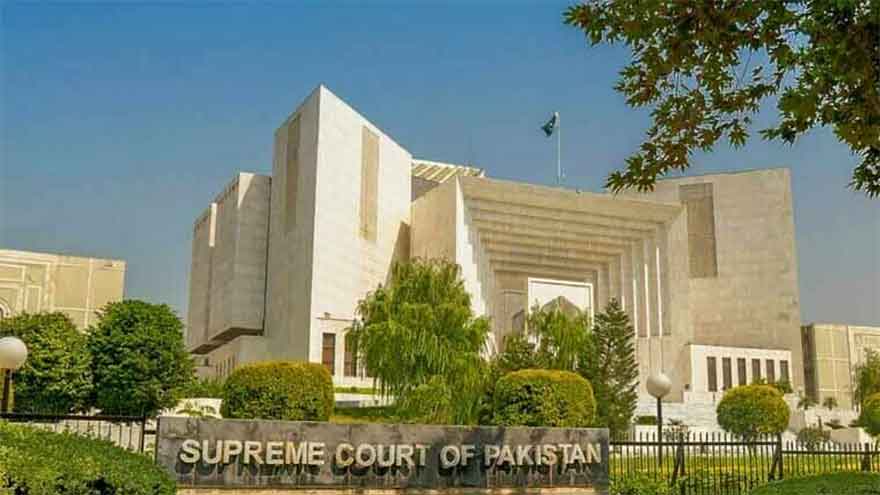
ISLAMABAD (Dunya News) –The Supreme Court of Pakistan has ruled that while the state has the constitutional authority to acquire private land for projects serving the public interest, it is equally bound to ensure affected landowners receive full, fair, and realistic compensation.
In a detailed 20-page judgment authored by Justice Muhammad Ali Mazhar in the Swabi land compensation case, the apex court held that compensation for acquired land cannot be determined solely on the basis of government-notified rates.
The court ruled that authorities must also consider the land's prevailing market value, its potential future use, and the prospects for development when assessing compensation.
The judgment further stated that where there is a delay in the land acquisition process, any increase in land prices and the impact of inflation during that period should also be reflected in the compensation awarded to landowners.
Emphasising the principle of complete financial justice, the Supreme Court observed that compensation should follow the principle of "gold for gold, not copper," ensuring that property owners receive an equivalent value for what they have lost.
The case concerned compensation for land acquired for a canal project in Swabi. Landowners had challenged the government's compensation package, arguing that it was significantly below the land's actual value.
A Reference Court, after examining the evidence, enhanced the compensation, a decision that was subsequently upheld by the Peshawar High Court.
The Khyber Pakhtunkhwa government later challenged the enhanced compensation before the Supreme Court. However, the apex court dismissed all civil appeals, affirming the decisions of both the Reference Court and the Peshawar High Court.
Reiterating its position, the Supreme Court held that compensation for acquired land must reflect its genuine market value, future potential, and any appreciation in value caused by delays in acquisition proceedings.
The court concluded that fair compensation is a constitutional right of every affected citizen and that the state must fulfil this obligation whenever it acquires private property in the public interest.