
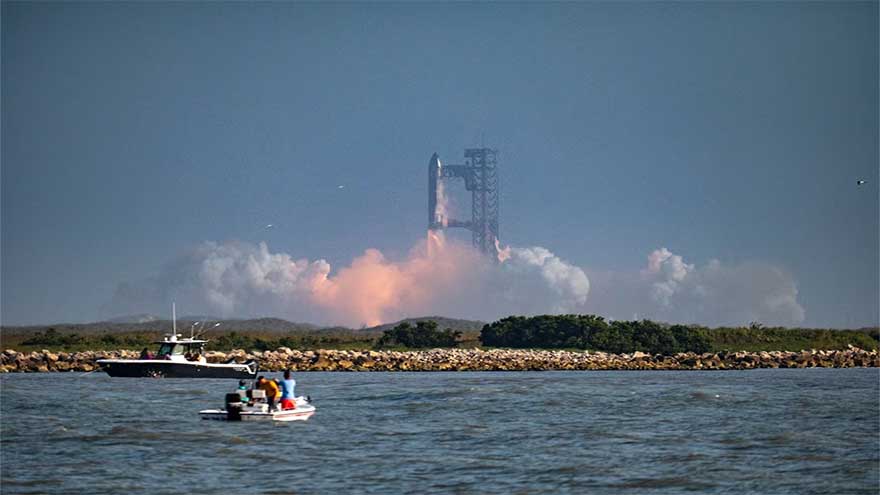
Summary In recent years, many companies including Elon Musk’s SpaceX have rushed to launch “megaconstellations” of satellites, using them to provide internet connections.
(Web Desk) - The growing number of satellites in space poses a danger to Earth because of the pollution released in their launches, scientists have warned.
In recent years, many companies including Elon Musk’s SpaceX have rushed to launch “megaconstellations” of satellites, using them to provide internet connections.
That has led to a range of problems, including warnings from scientists that the satellites are clogging up the sky. That brings an increased risk of collisions – which experts warn could rapidly make space inaccessible.
Now scientists have warned that the launches themselves are also polluting space. By the end of the decade, such launches will account for 42 per cent the climate impact from space sector pollution, they warn.
When rockets are launched carrying the satellites, they put black carbon or soot into the upper atmosphere. That lasts much longer than the soot generated on the ground – leading to a 540 times more significant impact on the environment.
Some of that pollution could actually help mitigate climate change. The pollution helps block out the sunlight reaching the Earth’s surface, in a similar way to the geoengineering techniques that some have proposed as a possible solution to the heating of the Earth.
But the impact could be huge, negative and hard to predict, they warn. What’s more, their predictions could be an underestimate since they are based on data from 2020 to 2022 – but space companies are rapidly increasing the number of launches.
“The space industry pollution is like a small-scale, unregulated geoengineering experiment that could have many unintended and serious environmental consequences,” said Eloise Marais from University College London, who led the project.
“Currently the impact on the atmosphere is small, so we still have the chance to act early before it becomes a more serious issue that is harder to reverse or repair. So far there has been limited effort to effectively regulate this type of pollution.”
The work is described in a new paper, ‘Radiative Forcing and Ozone Depletion of a Decade of Satellite Megaconstellation Missions’, published in the journal Earth Futures.