Summary India's voter roll revision raises concerns over mass deletions, Muslim discrimination, citizenship disputes, and alleged deportations across the Bangladesh border.
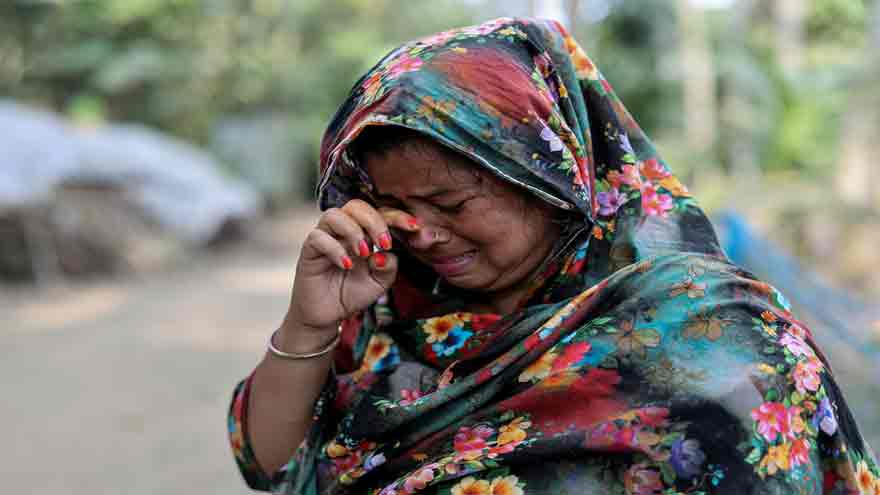
SWARUPNAGAR,India/SATKHIRA,Bangladesh (Reuters) - When Sahida Fakir stepped out of her Mumbai home on July 19 to buy vegetables, she told her younger son she would be back in minutes.
More than three months later, the 38-year-old is living in a Bangladeshi village, separated from her husband and two sons.
Fakir said plainclothes officers detained her, seized her phone — which she said contained copies of identity documents — and eventually forced her across the border. Court filings show the officials belonged to the Mumbai police crime branch. The department did not respond to a request for comment.
"Someone grabbed my hand from behind and ordered me to get into the vehicle," Fakir told Reuters in Satkhira, Bangladesh.
Fakir is among 10 families Reuters interviewed whose relatives were detained, deported or questioned over their citizenship after being dropped from India's revised electoral rolls. All had Indian identity or family documents while relatives including parents and siblings remained on the voter lists.
The cases show how India's sweeping voter-roll revision has become entangled with a separate drive to identify and expel suspected illegal immigrants, even though removal from the rolls does not itself establish that someone is a foreigner.
The voter list revision struck 130 million names nationwide in the largest deletion of voters in India's history. Data shows the omissions disproportionately affect Muslims, India's largest minority, who have faced what rights groups describe as exclusionary policies and rising discrimination, opens new tab since Prime Minister Narendra Modi's Hindu nationalist Bharatiya Janata Party took power in 2014.
The revision sparked massive protests and accusations that the BJP was reshaping the electorate in its favour. The party denies targeting legitimate citizens.
In West Bengal, where it has run furthest, around 9 million names were cut ahead of state elections earlier this year. Muslims made up about 70% of the 2.7 million names deleted after a closer review, despite being 27% of the population, according to the Kolkata-based Sabar Institute.
The BJP emerged victorious in those polls and took control of the state for the first time.
"We cannot deny the anti-incumbency factor but the voter deletions played a big role in determining West Bengal election results," the institute's founder, Sabir Ahamed, said.
VOTER ROLLS AND EXPULSIONS
Home Minister Amit Shah explicitly linked the two at a November 5 rally in the northern state of Haryana.
"It is the BJP's resolve that we will detect infiltrators, remove them from the electoral rolls, and after that, we will pick them out one by one and expel them from the country," Shah said.
West Bengal has been a major flashpoint for crackdowns primarily on Bengali-speaking Muslims.
Citizenship and migration carry particular weight in the state, where the border drawn by the British when India was partitioned in 1947 split the region into two. Millions crossed during the upheaval and again during Bangladesh's 1971 independence war, leaving families and communities straddling the frontier.