Summary Sindh CTD foils Karachi rail attack plot, arresting five members of an Indian-backed militant network targeting infrastructure.
KARACHI (Dunya News) – A major terrorist plot targeting railway infrastructure in Karachi has been foiled following the arrest of five suspected militants linked to the proscribed Baloch Republican Guard (BRG), with authorities alleging connections to an Indian-backed network.
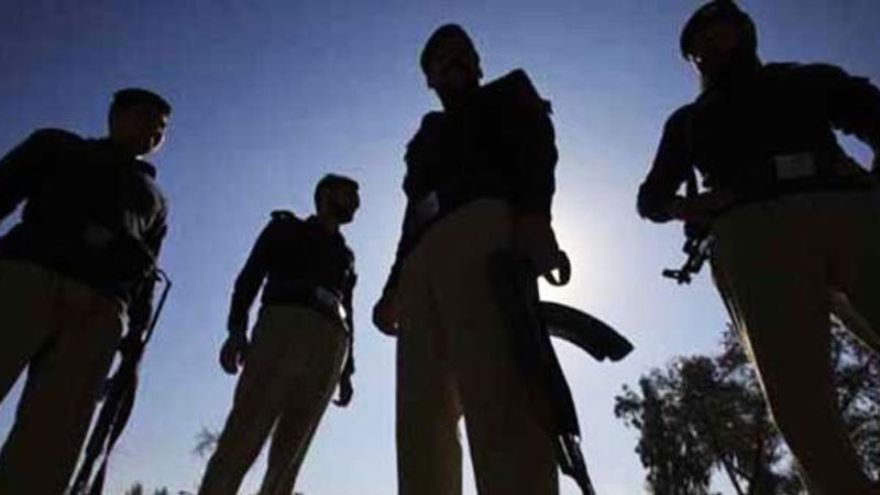
According to the Sindh Counter-Terrorism Department (CTD), the arrests were made during a joint intelligence-based operation conducted alongside Rangers and a federal civilian intelligence agency. The coordinated operation successfully disrupted a planned attack on railway tracks in the port city, preventing potential damage to a critical component of Pakistan’s transport network.
Officials stated that the detained suspects were part of a broader militant network involved in a series of low-intensity explosions across Sindh. These incidents took place in Jacobabad and Shikarpur, where railway tracks and at least one train carriage sustained partial damage. The group reportedly claimed responsibility for the attacks through its social media platforms.
The CTD revealed that the network had been under continuous surveillance, with intelligence agencies monitoring its activities closely. This sustained tracking enabled law enforcement to intercept the suspects before they could execute another planned act of sabotage in Karachi.
During the operation, security personnel recovered explosives, improvised explosive devices (IEDs), weapons, and ammunition. Initial interrogation has linked the suspects to multiple past incidents, including a train bombing in Jacobabad on 6 June 2025, an explosion near a railway station in Shikarpur on 28 July 2025, and an attack on the Jaffar Express on 7 October 2025, in which at least seven passengers were injured. Investigators also connected the group to an explosion near railway tracks on 26 January this year.
Authorities disclosed that the suspects had received training in Lehri, Balochistan, where they were also supplied with explosives. These materials were allegedly transported with the assistance of family members to evade detection by law enforcement agencies.
Addressing a press conference, Deputy Inspector General (DIG) CTD Azfar Mahesar described the arrests as a significant setback to the network’s operations. He confirmed that the suspects were directly involved in attempts to damage railway infrastructure and that their wider network had now been exposed.
Mahesar alleged that banned outfits, including the Baloch Liberation Army (BLA) and Balochistan Liberation Front (BLF), were receiving financial support from India’s intelligence agency, Research and Analysis Wing (RAW). He claimed the arrests had uncovered another Indian-backed terror nexus, adding that several operational networks were being run from across the border.
He further stated that Sindh had not recorded any major terrorism incidents over the past year, noting that the attacks attributed to this group were limited in scale but strategically targeted.
Sindh Home Minister Ziaul Hassan Lanjar praised the CTD and supporting agencies for the successful operation, reiterating that those involved in terrorism, including facilitators and financiers, would face strict legal consequences.
The latest development comes months after a major terror plot was thwarted in January on the outskirts of Karachi. In that operation, authorities seized approximately 2,000 kilograms of explosive material, including plastic drums, cylinders, and multiple detonators mounted on a vehicle described as ready to explode. Officials said the operation averted a potentially catastrophic incident in the city.
Investigations are ongoing, with authorities focusing on dismantling remaining elements of the network, tracing facilitators, and examining alleged cross-border financial and operational links tied to India.