Summary An IMF team led by Iva Petrova held discussions with Pakistani authorities in Karachi and Islamabad from September 23 to October 7 under the latest programme reviews
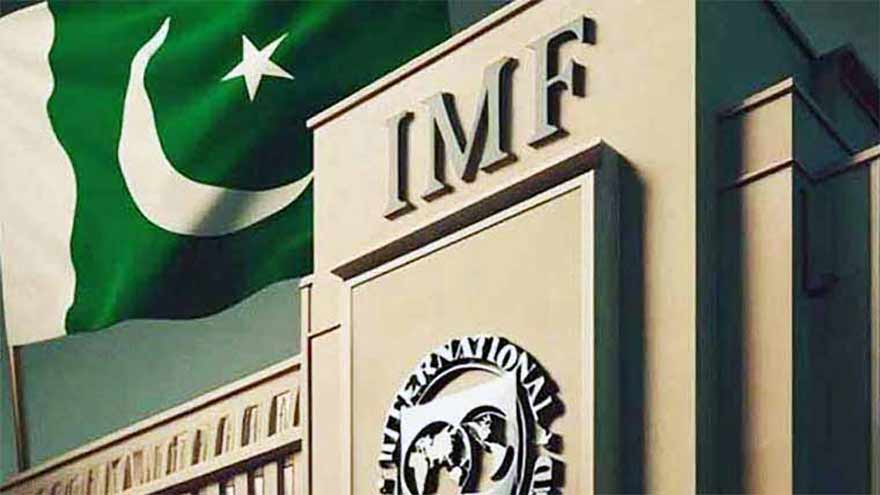
ISLAMABAD (Reuters) - The International Monetary Fund has reached a staff-level agreement with Pakistan on reviews of some of its lending programmes, potentially unlocking about $1.21 billion in financing pending board approval, the fund said on Wednesday.
If the board approves the deal, Pakistan could access about $1 billion under the Extended Fund Facility and $210 million under the climate-focused Resilience and Sustainability Facility, bringing total disbursements under the two programs to around $5.7 billion.
An IMF team led by Iva Petrova held discussions with Pakistani authorities in Karachi and Islamabad from September 23 to October 7 under the latest programme reviews as well as the 2026 Article IV consultation.
The Fund said Pakistan had maintained macroeconomic stability despite the impact of the Middle East conflict, with strong policies helping the economy withstand higher energy prices and supply disruptions.
Real GDP growth reached 4% during the first three quarters of FY26, while full-year growth is estimated at 3.6%. Headline inflation moderated to about 10.3% in September after peaking in May, while core inflation remained contained.
The IMF said Pakistan's current account was broadly balanced in FY26, supported by strong remittances, while gross foreign exchange reserves rose to about $21.5 billion by the end of September.
However, the Fund warned that risks remained high, citing geopolitical tensions, volatile energy prices, tighter global financial conditions and disruptions to trade.
IMF LAYS OUT REFORM PRIORITIES
The IMF said Pakistan's FY27 budget should be implemented firmly, with an underlying primary surplus target of 2% of GDP to help place public debt on a sustainable downward path.
It also called for continued reforms in revenue administration, including risk-based audits, digital invoicing and greater use of third-party data, while urging Pakistan to develop a simpler and fairer tax system.
The Fund stressed the need to strengthen public financial management, improve the efficiency of public investment and procurement, and reduce debt rollover risks amid high financing requirements.
On social spending, the IMF noted that health and education expenditure had increased from 2.2% of GDP in FY24 to 2.5% in FY26. The authorities plan to raise it further to 2.8% of GDP in FY27.
The Fund also called for timely energy tariff adjustments and cost-reduction measures to prevent a renewed buildup of circular debt, while improving efficiency in the power and gas sectors.
On monetary policy, the IMF said the State Bank of Pakistan should maintain an appropriately tight stance to ensure inflation returns sustainably to its target range. It also backed continued exchange-rate flexibility and further accumulation of foreign exchange reserves.
STRUCTURAL REFORMS
The IMF's Article IV assessment also called for structural reforms aimed at moving Pakistan's economy towards higher-value activities and narrowing productivity gaps with peer countries.
The Fund highlighted the need to strengthen competition, reduce regulatory and trade barriers, advance privatisation, improve governance of state-owned enterprises and strengthen governance and anti-corruption institutions.
It said such reforms, along with a fairer tax system, greater investment in human and physical capital, a more efficient energy sector and deeper financial markets, would be important for boosting productivity, employment, private investment and exports.
Under the RSF, the IMF said Pakistan had also made progress in incorporating climate considerations into public investment planning and strengthening disaster-risk financing.
The Fund said Pakistan's reform priorities also include reducing regulatory and trade barriers, advancing privatisation, improving governance of state-owned enterprises and strengthening anti-corruption institutions.
The latest agreement still requires approval from the IMF Executive Board before the funds can be released.