Summary Iran says it will completely shut the Strait of Hormuz and launch retaliatory attacks
- US Senate Democratic leader Chuck Schumer called for an end to the war in Iran, saying even some Republican lawmakers do not understand the administration's strategy in the Middle East.
- Fatih Birol, the executive director of the International Energy Agency (IEA), has warned that the situation in the Middle East is “very severe” and worse than the two energy crises in the 1970s put together.
- France's president Emmanuel Macron said on Sunday in a call with Saudi Crown Prince Mohammed bin Salman that all parties should halt attacks on energy and civilian infrastructure and that Iran should reopen the Strait of Hormuz.
DUBAI (AFP/Reuters/Web Desk) – Iran warned on Monday that it could deploy naval mines in the Gulf if the United States or Israel were to launch attacks on its coastal areas or islands, according to AFP.
In a statement reported by state media, Iran’s defence council said that any such aggression would, in line with standard military practices, result in key access routes and communication channels across the Persian Gulf and nearby coastal regions being mined. The statement added that this could involve a range of naval mines, including drifting types that can be deployed from shore.
In a statement carried by the Fars news agency, Iran’s National Defense Council said any attempt by “the enemy” to strike its coasts or islands would result in the mining of access routes and communication lines across the Gulf.
It added that the response could involve a range of naval mines, including floating devices capable of being launched from shore.
Earlier, the Revolutionary Guards said Iran would retaliate to an attack on its electricity sector by targeting Israel's power plants as well as power plants supplying US bases with electricity in regional countries.
A statement issued on Monday seemingly retracted earlier threats to desalination plants in the region, which are crucial for providing drinking water in Gulf countries.
"The lying ... US President has claimed that the Revolutionary Guards intends to attack the water desalination plants and cause hardship to the people of the countries in the region," the statement shared on state media said.
On Saturday, US President Donald Trump warned that Iranian power plants would be targeted if Tehran failed to "fully open" the Strait of Hormuz to all shipping within 48 hours.
"We are determined to respond to any threat at the same level as it creates in terms of deterrence ... If you hit electricity, we hit electricity," the Revolutionary Guards said.
Iranian attacks have effectively closed the Strait of Hormuz, which carries a fifth of global oil and liquefied natural gas, causing the worst oil crisis since the 1970s.
More than 2,000 people have been killed during the war the US and Israel launched on February 28, which has upended markets, spiked fuel costs, fuelled global inflation fears and convulsed the postwar Western alliance.
The threat of strikes on Gulf electricity grids on Sunday raised the fear of mass disruption to desalination for drinking water, and further unsettled oil markets, with prices opening choppy in Asia trading.
After more than three weeks of heavy US and Israeli bombardment that officials say has sharply reduced Iran’s missile capabilities, Tehran has continued to demonstrate its ability to strike back.
Air raid sirens sounded across parts of northern and central Israel, including in Tel Aviv, and the occupied West Bank overnight on Sunday, warning of incoming missiles from Iran.
The Israeli military said early Monday it had begun a wide-scale wave of strikes targeting Iranian infrastructure in Tehran.
The Washington Post on Monday reported on social media Iran's Supreme Leader Mojtaba Khamenei was "injured, isolated, and not responding to messages directed to him." Earlier this month an Iranian official told Reuters the country's new Supreme Leader had been lightly injured.
Khamenei succeeded his father Ayatollah Ali Khamenei, who was killed in the first wave of strikes on February 28. He has not been seen in public since his elevation.
Iranian news agencies said six people were killed and 43 injured in strikes on residential buildings in the western Khorramabad city.
The Iranian Red Crescent posted a video on Monday of a residential building in the affluent north of Tehran, with most of its facade destroyed and emergency staff rescuing someone on a stretcher from the upper floors.
Elsewhere in the region, the Saudi defence ministry said early Monday two ballistic missiles had been launched towards Riyadh. One missile was intercepted while the other fell in an uninhabited area.
ATTACKS ON POWER PLANTS COULD BE CATASTROPHIC
Trump's warning to strike Iran's power network came less than a day after he signalled the United States might be considering winding down the conflict, even as US Marines and heavy landing craft were heading to the region.
While attacks on electricity could hurt Iran, they could be catastrophic for its Gulf neighbours, which consume around five times as much power per capita.
Electricity makes their gleaming desert cities habitable, in part by powering the desalination plants that produce 100% of the water consumed in Bahrain and Qatar. Such plants use seawater to meet more than 80% of drinking water needs in the United Arab Emirates, and 50% of the water supply in Saudi Arabia.
Iran's powerful Revolutionary Guards said it would also mean the Strait of Hormuz would remain shut.
"The Strait of Hormuz will be completely closed and will not be opened until our destroyed power plants are rebuilt," the Guards said in another statement.
Iranian media on Sunday quoted the country's representative to the International Maritime Organisation as saying the strait remains open to all shipping except vessels linked to "Iran's enemies". Only a few ships, including Indian-flagged and a Pakistani oil tanker, have reportedly been allowed safe passage.
'WEEKS MORE FIGHTING'
The war has been taking place alongside a confrontation on a separate front between Israel and Lebanon's Hezbollah, backed by Iran.
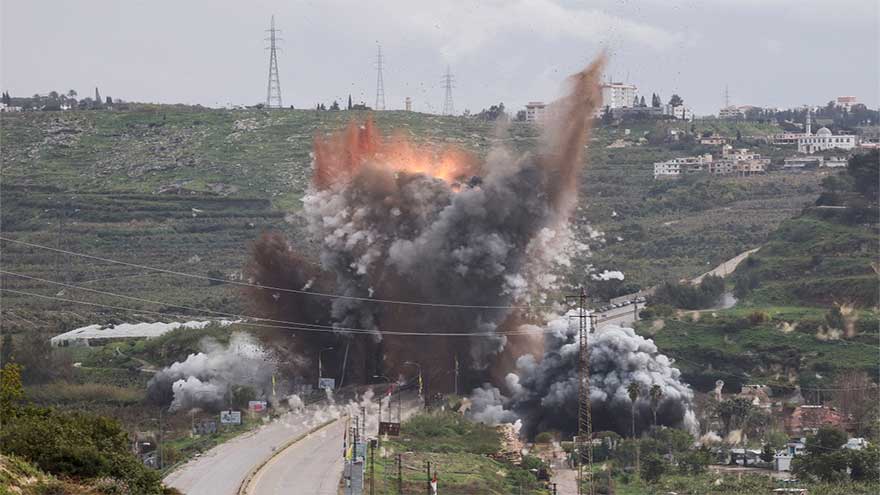
Israel said on Sunday its troops had raided a number of the armed group's sites in southern Lebanon.
Israeli military spokesperson Brigadier General Effie Defrin told reporters Israel expects "weeks more of fighting against Iran and Hezbollah."
Hezbollah said it had attacked several border areas in northern Israel. Israeli emergency services said one person was killed in a kibbutz near the border. Israel later said it was checking whether the death was caused by Israeli fire.
Hezbollah has fired hundreds of rockets at Israel since it entered the regional war on March 2, prompting an Israeli offensive that has killed more than 1,000 people in Lebanon.
DESTRUCTION, BLACKOUT IN IRAN’S CITY AFTER AIR ATTACK
Footage, verified by Al Jazeera, shows residents of the city of Khorramabad, west of Tehran, searching through the debris of a destroyed building following an air attack on the area.
The videos show residents using torches as the raid appears to have caused a blackout in the area.
SITUATION IN MIDEST EAST ‘VERY SEVERE’
Fatih Birol, the executive director of the International Energy Agency (IEA), has warned that the situation in the Middle East is “very severe” and worse than the two energy crises in the 1970s put together.
In an address to the National Press Club of Australia, Birol said that the biggest solution to the ongoing crisis is the reopening of the Strait of Hormuz, which Iran has effectively blocked following the US-Israeli attack on the country.
As we’ve been reporting, Trump has issued an ultimatum to Iran to fully open the Strait, saying the US will hit Tehran’s power plants otherwise. Iran has said it will hit energy infrastructure as well as desalination facilities across the Middle East region if its energy grid is attacked.
GLOBAL OIL, GAS MARKETS FACE INSTABILITY
Ana Maria Jaller-Markarewicz, a lead analyst for the Institute for Energy Economics and Financial Analysis, says the war’s impact on energy markets is completely dependent on how long it lasts.
She noted that about 20 percent of the world’s LNG supply is currently disrupted, along with roughly 25 percent of oil and oil products – putting significant pressure on markets worldwide.
“The longer it takes, the more difficult it is to find stabilisation in the market, and we could see some demand disruption,” she told Al Jazeera.
Jaller-Markarewicz said Europe has been seeing “red flag signals” on the gas market for a while, but the continent has been ignoring those warnings.
“We had a big situation in Europe four years ago; the gas market was in crisis. We found ways to kind of support the crisis a little bit, and that was reducing gas consumption. Renewables have been playing a vital role here because what we have seen in the oil and gas market is that there’s a lot of volatility – any war, even any weather situation, could disrupt gas and oil markets,” she said.
The analyst also called for a “steady, long-term solution”, noting that both geopolitics and weather events have repeatedly shown how fragile global energy markets can be.
TOP SENATE DEMOCRAT URGES END TO WAR
US Senate Democratic leader Chuck Schumer called for an end to the war in Iran, saying even some Republican lawmakers do not understand the administration’s strategy in the Middle East.
“Even some Republican Senators are openly admitting they have no clue what the Administration is trying to accomplish in the Middle East,” Schumer wrote on X Sunday.
“Enough is enough. End this war,” he added.
IRAN SAYS HORMUZ ‘NOT CLOSED
Iran’s foreign minister Abbas Araghchi said on Sunday that commercial shipping through the Strait of Hormuz has slowed because insurers are wary of the conflict, blaming the United States for creating the conditions that have unsettled maritime traffic.
“The Strait of Hormuz is not closed,” Araghchi wrote on X. “Ships hesitate because insurers fear the war of choice you initiated—not Iran.”
“Freedom of Navigation cannot exist without Freedom of Trade. Respect both—or expect neither,” he added. “No insurer—and no Iranian—will be swayed by more threats. Try respect.”
MACRON URGES HALT TO STRIKES
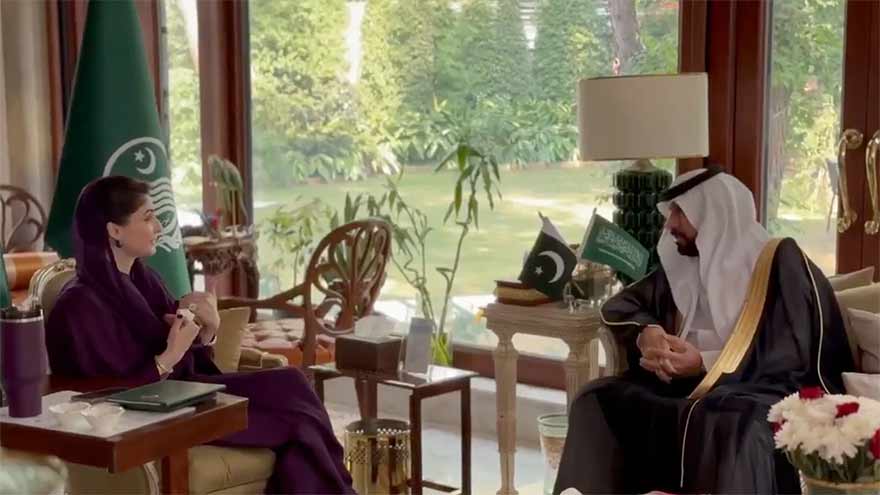
France’s president Emmanuel Macron said on Sunday in a call with Saudi Crown Prince Mohammed bin Salman that all parties should halt attacks on energy and civilian infrastructure and that Iran should reopen the Strait of Hormuz.
“It is more essential than ever that all parties … agree to establish a moratorium on energy and civilian infrastructure and that Iran restore freedom of navigation in the Strait of Hormuz,” Macron said in a post on X
He warned of the risk of uncontrolled escalation and called for restraint to allow a return to dialogue.
Macron added that France stands ready to support Saudi Arabia’s air defense and said the G7 and the Gulf Cooperation Council (GCC) should strengthen coordination.